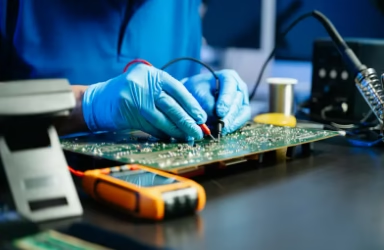
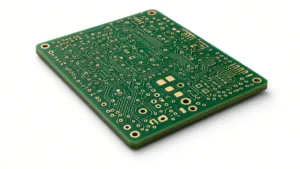
In electronics manufacturing and repair, the use of flux is almost unavoidable, as it improves solder wetting and enhances joint quality and production efficiency. However, after soldering, flux often leaves residues on the surface of printed circuit boards (PCBs). If these residues are not properly removed, they can gradually cause leakage, corrosion, or even short circuits under the influence of humidity, temperature, or electrical stress, ultimately affecting product stability. Therefore, understanding how to efficiently and thoroughly remove flux residue from PCBs has become an essential step in ensuring long-term reliability in electronic devices.
Common Types of Flux Residues
Before cleaning, it is important to identify the type of flux, since different residues directly determine the cleaning method and difficulty:
Rosin-based flux: commonly leaves visible residues with slight stickiness
No-clean flux: minimal visible residue but may still contain ionic contamination
Water-soluble flux: easy to dissolve but can cause corrosion if not fully removed
Highly active flux: more difficult to clean and more corrosive
Mixed residues: may occur in complex manufacturing processes
No clean flux is formulated so a thin residue can remain on assemblies that will not see high humidity, high voltage, conformal coating, or a cleanliness specification that forbids it. That is a process boundary, not a promise that every film is harmless: if the flux is only labeled no-clean but the board will be coated, used outdoors, or measured for ionic contamination, the residue still has to be reviewed for removal rather than assumed safe because it is hard to see.
Common Methods for Removing Flux
Depending on the level of contamination and application scenario, suitable cleaning methods should be selected to ensure effective removal:
Isopropyl alcohol (IPA) or ethanol cleaning for light residues
Specialized PCB cleaning agents for stronger and more targeted cleaning
Ultrasonic cleaning for removing residues in tight or complex areas
Deionized water rinsing for water-soluble flux
Spray cleaning systems for improved efficiency in industrial production
Standard Flux Removal Process
A standardized cleaning procedure helps improve consistency and minimizes the risk of remaining contamination:
Pre-cleaning to remove visible dirt and particles
Applying cleaning agents evenly to affected areas
Using soft brushes or soaking to break down residues
Thorough rinsing to eliminate chemical remnants
Drying with hot air or baking to remove all moisture
Key Precautions During Cleaning
Careful control during cleaning is necessary to avoid secondary contamination or damage to the PCB:
Use high-purity solvents or deionized water to prevent new contamination
Control the amount and concentration of cleaning agents
Avoid using hard tools that may scratch traces or components
Ensure complete drying to prevent moisture-related issues
Perform post-cleaning inspection for high-precision PCBs
Although flux plays a vital role in the soldering process, its residues can become hidden risks that affect PCB performance. By correctly identifying flux types, selecting appropriate cleaning methods, and following standardized procedures, manufacturers can significantly reduce electrical failures and corrosion risks. As electronic products demand higher reliability and stability, the importance of proper cleaning continues to grow. For businesses, effective flux removal not only improves product quality but also reduces after-sales costs, ultimately enhancing competitiveness in the market.
When can no clean flux residue stay on the board?
It can stay when the flux is specified as no-clean, the assembly drawing does not require washing or coating, and the use environment and insulation requirements accept that residue. If you need coating, a measured cleanliness level, or the product will see humidity or high voltage, say so on the drawing so residue removal is quoted with the assembly—not decided after first article.
Need to decide whether flux residue must be removed? See PCB assembly and testing and inspection. Send the flux type, use environment, and any coating or cleanliness notes via Contact Us.
Engineering Support for Your PCB Project
Need help with your PCB or assembly project? Contact our team to discuss your design, manufacturing and testing requirements.
Humanoid robot PCB requirements vary across the electronic boards inside the machine. A humanoid robot uses several board types rather than one general-purpose controller. Joint motor drivers, encoder boards, hand sensors, onboard
Inconsistent solder paste deposits on fine-pitch HDI pads can result from poor paste release from the stencil, uneven board support, problems with paste storage or handling, or incorrect printer settings. The HDI
PCB board technology is how modern electronics get both mechanical support and copper interconnects on a single laminate—pads, traces, vias, layers, and materials that determine density, speed, heat, and cost. By the
To provide the best experiences, we use technologies like cookies to store and/or access device information. Consenting to these technologies will allow us to process data such as browsing behavior or unique IDs on this site. Not consenting or withdrawing consent, may adversely affect certain features and functions.
Functional
Always active
The technical storage or access is strictly necessary for the legitimate purpose of enabling the use of a specific service explicitly requested by the subscriber or user, or for the sole purpose of carrying out the transmission of a communication over an electronic communications network.
Preferences
The technical storage or access is necessary for the legitimate purpose of storing preferences that are not requested by the subscriber or user.
Statistics
The technical storage or access that is used exclusively for statistical purposes.The technical storage or access that is used exclusively for anonymous statistical purposes. Without a subpoena, voluntary compliance on the part of your Internet Service Provider, or additional records from a third party, information stored or retrieved for this purpose alone cannot usually be used to identify you.
Marketing
The technical storage or access is required to create user profiles to send advertising, or to track the user on a website or across several websites for similar marketing purposes.
 Skip to content