 Skip to content


PCBs and Assemblies for Power and Energy Systems
Topline Circuit provides PCB fabrication and assembly for solar inverters, energy storage systems, charging equipment and power converters. Send your board revision, build quantity and operating conditions so we can review the construction and test scope for your quote.
Manufacturing Requirements by Application
| Application | What to specify | What we review |
|---|---|---|
| Solar and storage inverters | DC bus voltage, continuous and peak currents, peak duration and cooling conditions. | Finished copper thickness, current paths, component mounting and heat transfer. |
| Battery management systems (BMS) | Cell count and voltage range, sensing accuracy, balance current and isolation requirements. | Connector pinouts, specified isolation spacing and access for sensing and balance tests. |
| Charging equipment | Input and output ranges, load profile, enclosure and terminal layout. | Board fit, specified creepage and clearance, and load test setup. |
| Power supplies and DC-DC converters | Supply range, load steps, ripple limits and available airflow. | Stack-up, thermal interface and electrical test requirements. |
Review Copper Construction and Cooling
Mark the high-current paths and terminals on the layout. For each path, specify continuous and peak current, how long each peak lasts, how often it repeats, maximum ambient temperature and allowable temperature rise. Include the proposed finished copper thickness and cooling arrangement.
Identify heatsink interfaces and connector support on the mechanical drawing. We review fabrication and assembly requirements against the released design and stated operating conditions.

Specify Insulation and Assembly Requirements
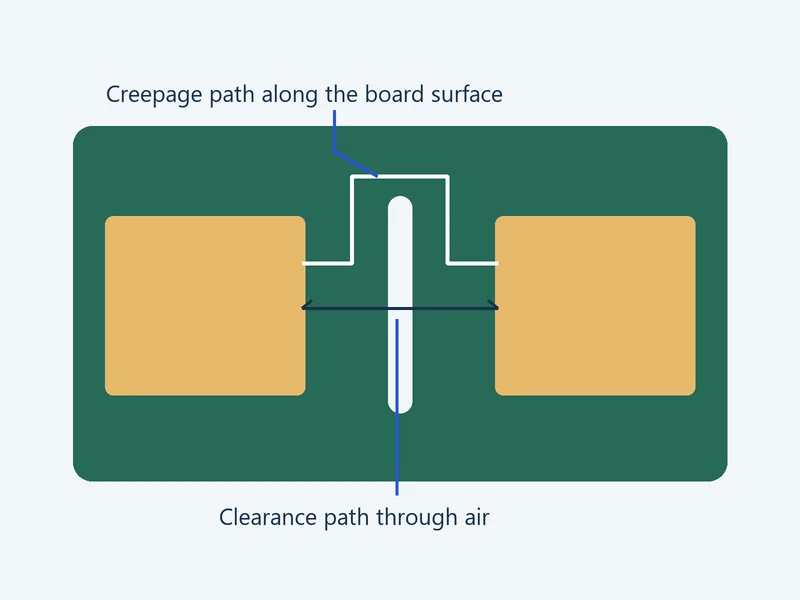
Mark the isolation boundaries on the released drawing. Provide working voltage, required creepage and clearance, and the applicable project specification. Include coating and masking requirements where applicable.
For PCB assembly, identify terminal hardware, mounting constraints, approved components and any customer approval needed before substitutions.
Define Board-Level Tests and Reports
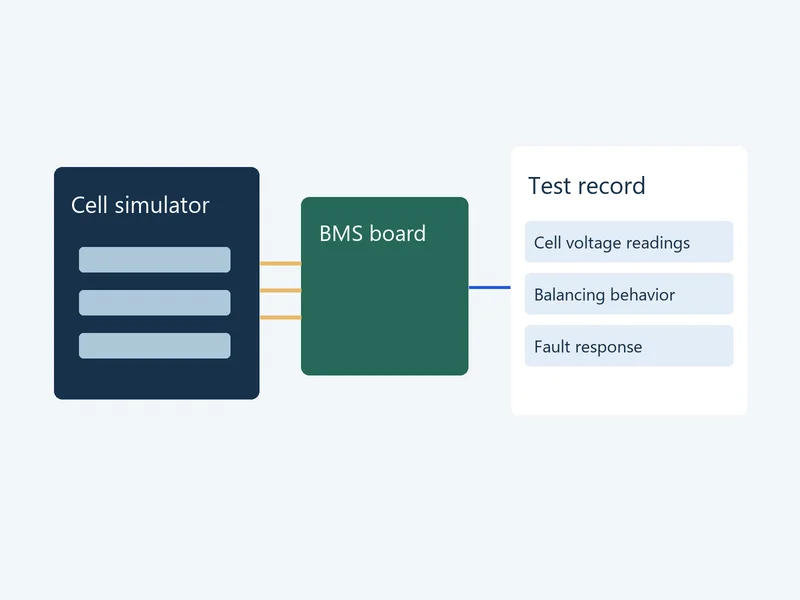
For power-up or load testing, provide supply settings, current limits, load sequence, duration, measurement points and pass/fail limits. For BMS testing, specify simulated cell voltages, firmware revision, allowable measurement error and any balancing outputs or fault responses to verify.
Identify which checks apply to each unit or to a sample. Specify the results to link to a board serial number or production lot.
Files for a Power PCB Quote
- Board revision, fabrication data, drill files, stack-up and drawings
- BOM, placement data and assembly drawings for PCBA orders
- Voltage and current profiles, cooling and insulation requirements
- Build quantities, test procedure, fixtures, acceptance limits and report requirements
Power and New Energy PCB FAQs
Mark the current paths and provide continuous and peak current, peak duration, duty cycle, cooling and allowable temperature rise. Include the proposed stack-up and finished copper thickness by layer if available. We review the copper construction and flag any current paths or thermal assumptions that need clarification before quoting.
Provide the working voltage, applicable specification, isolation boundaries and required creepage and clearance on the drawing. If an insulation test is required, specify the test points, voltage, duration and pass/fail criteria.
Send the cell voltage ranges, connector pinout, firmware and expected readings. Tell us which checks must run with simulated inputs and whether you can supply a fixture. Include voltage measurement tolerances, expected balancing behavior and any fault conditions to simulate. We confirm which checks the proposed setup can cover.
Request per-unit testing in your quote. Provide the load sequence, supply settings, test duration and limits. Specify the serial number format and which readings, units, pass/fail results and retest records to include. State when to take readings during the load test.
Send the old and new part numbers, datasheets and affected board revision. Mark changes to mounting, current path or thermal interfaces. Identify who approves the change and which checks must be repeated.
Yes. Send released fabrication data and quantity for bare boards. For assemblies, add the BOM, placement data, assembly drawing, sourcing instructions and required tests.
Discuss Your Power PCB Requirements
Send the board revision, application and quantity. Include the voltage and current profile, cooling conditions and any inspection or test records required for the quote.