 Skip to content


PCB Conformal Coating Services
Protect Your Assembly with a Defined Coating Process
We provide PCB conformal coating services for prototype and production assemblies. We review the operating environment, coating material, coverage and inspection requirements to define the process for your product.
Send the assembly files, coating drawing and specified material or environmental protection requirements. Identify the areas to coat and keep clear so we can review masking, application, curing and acceptance before production.
Select the Material for the Actual Exposure
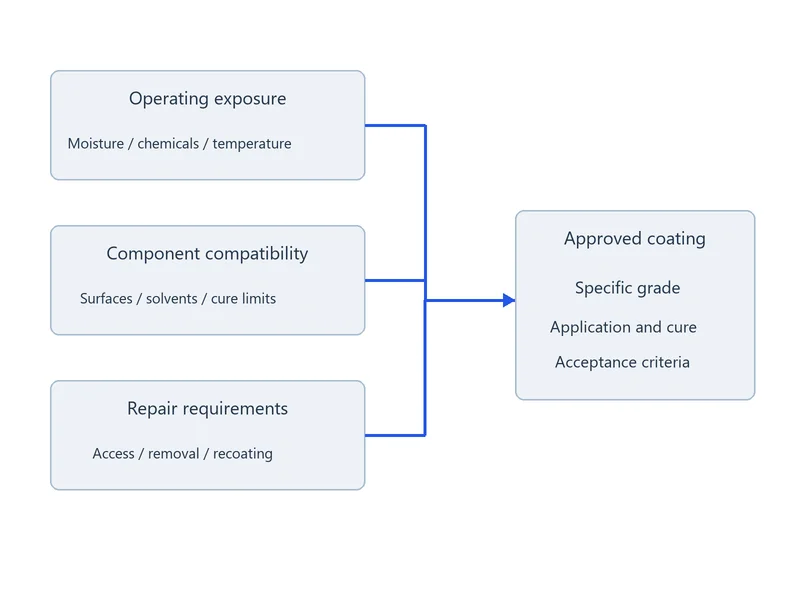
Define moisture or condensation exposure, chemicals, operating temperatures and any flexibility or rework requirements. Compare specific coating grades with the assembly materials and component limitations before selecting a product.
Material options include acrylic, polyurethane, silicone and epoxy coatings, with parylene evaluated as a separate vapor-deposition route. The material family is a starting point; the approved product and process define the coating requirements.
Compare Coating Materials and Process Needs
| Material family | Selection priorities | Process review |
|---|---|---|
| Acrylic | Moisture protection and access for later repair | Check the specific grade, solvent compatibility and removal method |
| Polyurethane | Chemical exposure and the required protective properties | Review cure conditions, substrate compatibility and rework requirements |
| Silicone | Temperature exposure, flexibility and material compatibility | Review the specific cure chemistry, adhesion and contamination controls |
| Epoxy | Mechanical and chemical resistance requirements | Evaluate coating stress, cure limits and access for future repairs |
| Parylene | Thin-film coverage for the specified environment | Review vapor deposition, masking, adhesion and coating removal separately |
Define Coverage and Keep-Out Areas on the Drawing
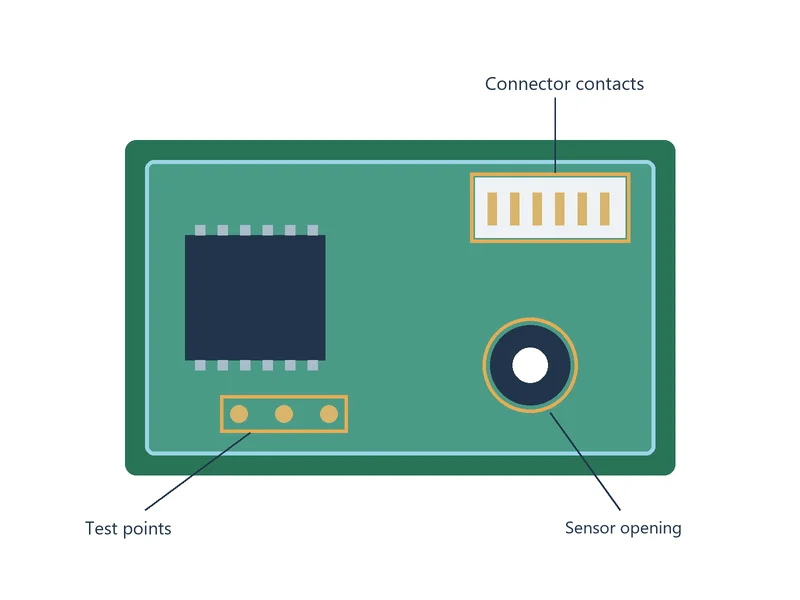
Mark the coated sides, required coverage and keep-out boundaries on the assembly drawing. Identify connector contacts, sensor openings, switch contacts, mating surfaces and any test or programming access that must remain clear.
Include dimensions and tolerances for critical boundaries, and identify components that may allow coating to wick inside. Review masking materials, selective application and mask-removal steps against the actual component construction.
Match the Application Method to the Assembly
Liquid coatings can be applied by selective coating, spraying, dipping or brushing, depending on the material and assembly geometry. Review access beneath and around components, board support, masking and the required coverage before selecting the route.
Parylene uses a vapor-deposition process rather than a liquid application method. Define its surface preparation, masking and deposition requirements independently from a spray or dip process.
Prepare a Clean, Dry and Compatible Surface
Review flux residues, handling contamination and moisture before coating. Define the cleaning, drying and cleanliness verification needed for the selected coating and the actual assembly.
A no-clean flux designation does not by itself establish coating compatibility. Review the flux and coating guidance, component cleaning restrictions and the required validation before approving a process.
Control Thickness, Cure and Final Inspection
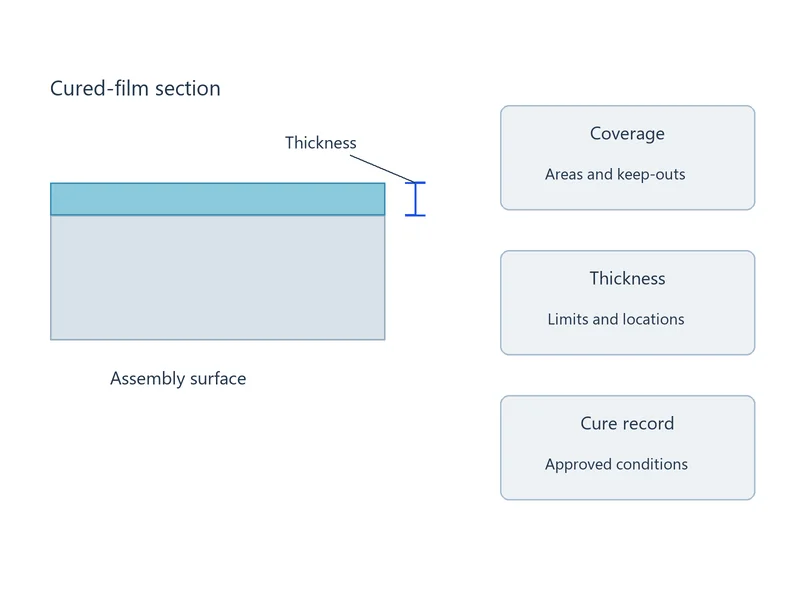
Specify the cured coating thickness in micrometres, its allowed variation and the locations and method used to measure it. Use the approved material guidance and assembly requirements to establish application and cure conditions.
Inspect required coverage, keep-out areas and defects such as bubbles, dewetting or unintended bridging against the approved criteria. UV inspection can help reveal coverage when the coating contains a suitable tracer; thickness and cure need their own specified checks.
Coating Requirements to Include with Your Order
| Requirement | Information to define |
|---|---|
| Material | Manufacturer, product grade, approved alternatives and any material qualification requirements |
| Coverage | Coated sides, required areas, keep-outs and boundary tolerances |
| Thickness | Cured-film target and limits in µm, measurement method and locations |
| Cure | Material-specific time and temperature, humidity where relevant, and UV wavelength, irradiance and dose where required |
| Acceptance | Applicable workmanship criteria, document revision, inspection scope and records |
| Rework | Permitted removal method, repair limits, recoating and reinspection requirements |
Files for a Conformal Coating Quote
- Assembly drawings, board dimensions, component layout and build quantity
- Operating environment and the required protective performance
- Coating manufacturer and grade, or the information needed for material selection
- Coverage and masking drawing with critical boundary dimensions
- Component restrictions on solvents, moisture, temperature and coating ingress
- Cured-film thickness, measurement locations and acceptance limits
- Applicable standards, document revisions, tests and reporting requirements
- Repair access, packaging and any supplied-board conditions
For a combined PCB assembly order, define programming and test access before approving the coating sequence. Mark preliminary requirements clearly so material and process decisions can be resolved before production.
Conformal Coating FAQs
Describe the actual exposure: condensation, chemicals, temperature range and expected handling or service conditions. Include the component materials, operating requirements and need for future repair. Compare specific candidate grades and their application and cure limits, then approve the material and validation requirements before production.
Provide a keep-out drawing identifying contacts, openings and other areas that must remain clear. Include boundary dimensions and tolerances, plus the component guidance on liquid ingress or deposition into sensitive openings.
Review suitable masking or selective application, including capillary paths into the part. After coating and mask removal, inspect keep-out areas against the drawing and complete any specified connector or sensor checks before release.
The decision depends on the actual residue, coating chemistry and acceptance requirements. Review the flux and coating manufacturer guidance, component cleaning restrictions and the evidence needed for adhesion and electrical performance. Approve the preparation process from those results rather than assuming that all no-clean assemblies can be coated directly.
Do not increase thickness without reviewing the selected material and assembly. Excess thickness can affect cure, clearances or coating stress, while insufficient coverage can leave exposed areas. Specify the cured-film target, limits and measurement locations, then verify them using the approved method. If a result is outside the limits, hold the affected assembly and approve correction and reinspection before release.
A coating does not by itself establish a waterproof product or an IP rating. Define the required exposure and evaluate the complete assembly, including connectors, openings, enclosure interfaces and uncoated areas. Use the agreed product-level tests to verify performance under those conditions.
Identify the existing coating grade and the approved removal method before starting repair. Review compatibility with the components and board, and define the area that may be stripped.
After repair, prepare the surface, restore the required coating and complete the specified cure and reinspection. Retain the repair record and repeat any affected electrical or functional tests.
Discuss Your Assembly Protection Requirements
Send your assembly files, exposure requirements and coating drawing. We will review the material, masking, application and inspection scope for your project.