 Skip to content


Bring Your Electronics Project into Production
Topline Circuit provides electronic contract manufacturing services covering PCB fabrication, component sourcing, assembly, inspection and testing. We support prototypes, initial production and repeat orders with a manufacturing scope defined around your product.
Send your current files, required deliverable and order plan. We will review the production requirements, material responsibilities and approval steps for your project.
Define What You Need Delivered
Specify whether you need assembled circuit boards, a tested subassembly or an integrated product assembly. Identify which manufacturing activities you want us to manage and which parts, files or fixtures your team will supply.
Our PCB assembly services cover board population and related inspection. For a wider manufacturing project, define the additional integration, configuration, packaging and delivery requirements in the order scope.
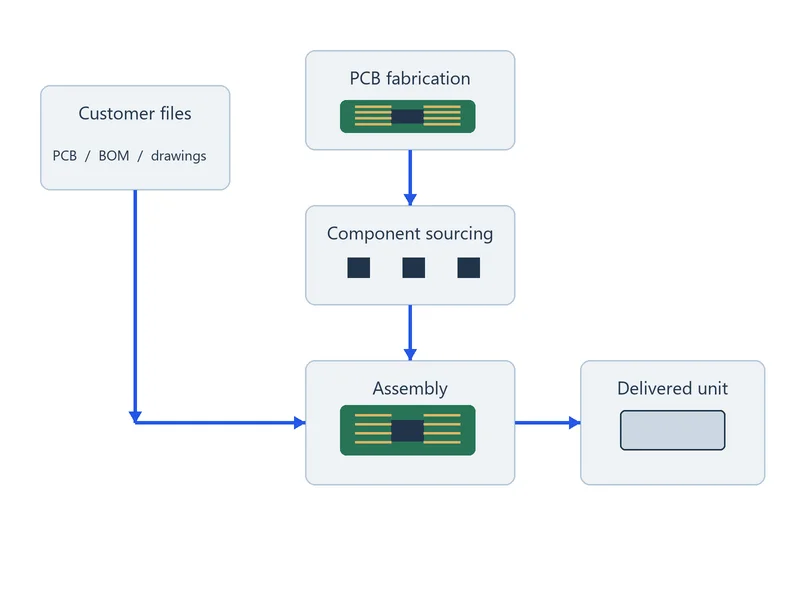
Manufacturing Scope and Project Responsibilities
| Project area | Scope to define | Information to provide |
|---|---|---|
| PCB fabrication and assembly | Board supply, component population and required processes | Released PCB data, BOM, placement files and assembly drawings |
| Material procurement | Full turnkey, partial turnkey or customer-supplied materials | Manufacturer part numbers, approved alternatives and supply ownership |
| Product integration | Wiring, enclosure installation and configuration where included | System BOM, mechanical drawings, pinouts and assembly instructions |
| Programming and testing | Approved firmware, inspection coverage and test sequence | Program files, interfaces, fixtures, limits and pass/fail criteria |
| Production releases | Initial quantity, repeat orders and change approval | Product revision, delivery schedule and authorized release contacts |
| Shipment | Unit identification, records, accessories and packaging | Label artwork, traceability requirements and shipment configuration |
Approve the Initial Build Before Repeat Production
Review the PCB data, BOM, placement files and assembly instructions as one controlled release package. Record unresolved sourcing, assembly and test questions before the initial build starts.
Agree on first-article quantities, inspection records and any approval hold point. After the initial build, document the findings, approve necessary corrections and release the next batch against the updated file set.
Transfer an Existing Product with a Clear Handover
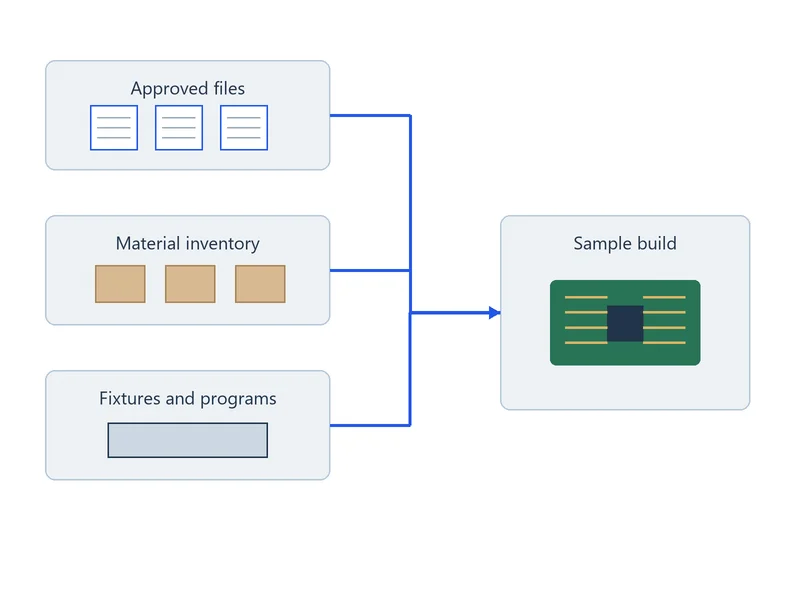
Provide the current approved manufacturing files, known assembly issues and available inspection or test records. List the inventory, programmed devices, fixtures and tools that need to move from the existing supplier.
Identify the owner and condition of each transferred item, along with the software access and instructions needed to use it. Confirm the transfer checklist and sample-build acceptance before scheduling regular production.
Plan Materials Around Approved Demand
Separate planning forecasts from confirmed purchase orders and production releases. Agree on procurement authorization for long-lead-time parts, minimum purchase quantities and any non-cancellable material commitments before purchasing.
Identify approved alternatives and the approval route for unavailable parts. Define responsibility for customer-supplied stock, unused materials and obsolete inventory so a quantity or design change has a clear handling plan.
Control Engineering Changes Across Each Batch
Submit an engineering change with the affected part numbers, documents, firmware and intended effective batch or serial-number range. We review the effect on open purchases, received materials and work in progress before the change is approved for production.
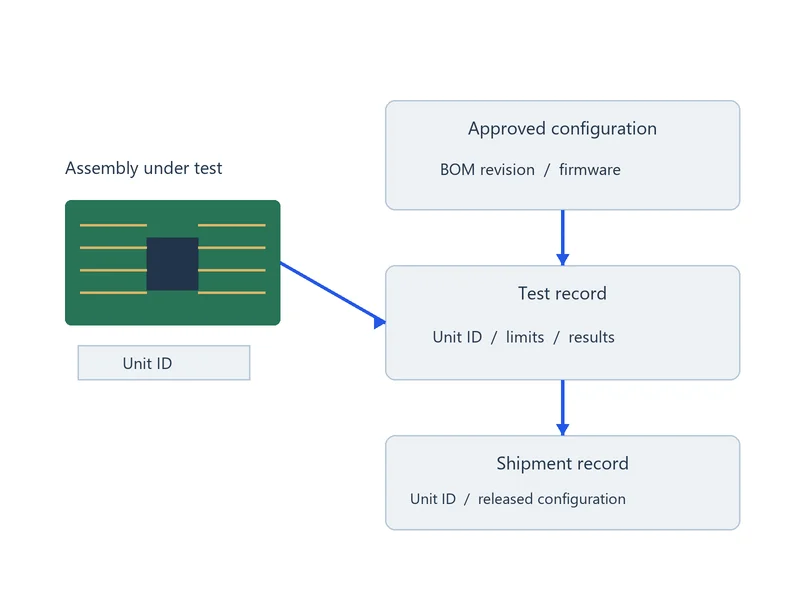
Record the approved disposition for existing stock and partly built units, together with any rework, retesting, cost or schedule changes. Keep each production release linked to its approved BOM, drawings and firmware configuration.
Connect Acceptance Records to the Delivered Configuration
Define the inspection and test coverage for the actual product configuration, including fixture connections, supply settings, loads and acceptance limits. Specify voltage and current limits with units, test loads, timing and pass/fail criteria. Record programming verification separately from functional-test results.
Specify the batch or unit identification needed to link materials, firmware and test results to the shipment. Agree on the reporting and disposition process for nonconforming units before release.
Prepare Your Manufacturing Project Brief
- Product description and required deliverable: PCBA, subassembly or integrated unit
- Current PCB files, BOM, placement data and assembly drawings
- Initial order quantity, expected repeat demand and requested delivery dates
- Customer-supplied materials, existing inventory and sourcing requirements
- Mechanical, wiring, firmware and configuration files where applicable
- Inspection plan, test procedures, fixtures and acceptance criteria
- Transfer requirements, first-article approval and authorized change contacts
- Labels, records, accessories, packaging and shipment requirements
Preliminary files can support an initial review. Mark draft documents and open decisions clearly so the quotation can distinguish confirmed scope from items still needing definition.
Electronic Contract Manufacturing FAQs
Start with the approved PCB, BOM, placement and assembly files, firmware and test procedures. List remaining stock, fixtures, tooling and known production issues, with their ownership and condition. Where available, include an approved sample or reference unit for comparison. Confirm access to required software and records, then agree on a sample build and acceptance checklist before releasing repeat production.
Yes. Send the available files, current revision, intended quantity and unresolved questions. Identify any provisional parts, mechanical details or test requirements. An initial quotation should state its assumptions; production starts only after the required release files and open decisions are approved.
A forecast does not authorize component purchases unless your agreement explicitly makes it a purchasing instruction. Use it for material and capacity planning, then issue the agreed purchase order or written authorization with quantities and dates. Identify long-lead-time and non-cancellable commitments before approval, and confirm changes in writing.
Notify us of the affected items and request a hold on the relevant purchasing or production activities. Review open orders, received stock and work in progress before approving the change. Agree on reuse, return, rework or other disposition, then document the effective batch and any cost, delivery or retest changes.
Record ownership and handling responsibilities in the purchasing agreement before materials are ordered or transferred. Address minimum order quantities, unused stock, storage, returns and obsolete parts, including what happens if an order is reduced or cancelled. Request an inventory statement showing part numbers, quantities, ownership and the orders to which stock is allocated. Agree on the disposition of remaining stock when a design changes or the program ends.
Identify ownership, access permissions and the approved revision for each fixture, program and procedure. Define maintenance, calibration where required, backup and return arrangements, together with the records you need for each shipment. For a future transfer, agree on the required files, instructions and equipment handover scope in advance.
Plan Your Next Manufacturing Release
Send your product files, order plan and current production status. We will review the manufacturing scope, material supply and approval steps for your next build.