 Skip to content


Check Solder Paste Before Component Placement
Topline Circuit uses 3D solder paste inspection after stencil printing and before component placement. We measure paste deposits on the programmed pads to identify missing paste, insufficient or excessive deposits, misalignment and potential paste bridges.
Send your assembly revision, paste-layer data and critical pads with your PCB assembly quote so we can review inspection coverage and acceptance limits.
What 3D SPI Measures
| Measurement | What it tells you | What to specify |
|---|---|---|
| Volume | How much paste was deposited on each programmed pad or aperture location. | Reference volume and lower and upper limits, with units or the percentage basis. |
| Height | The measured deposit height above the inspection reference surface. | Height metric and allowable range, typically in micrometers. |
| Area | The footprint of the printed deposit. | Allowable area in square millimeters or as a percentage of a defined reference area. |
| X/Y offset | How far the deposit is displaced from its programmed location. | Reference position and maximum allowed X and Y displacement, with units. |
Set Limits for Critical Pads
Identify fine-pitch parts, BGA pads and QFN exposed pads that need special attention. Provide the released paste layer or stencil aperture drawing. For a windowed thermal pad, identify whether limits apply to each deposit, their combined volume or both.
We review the reference values and acceptance limits against the aperture design and your assembly requirements.

Review Print Defects Before Placement
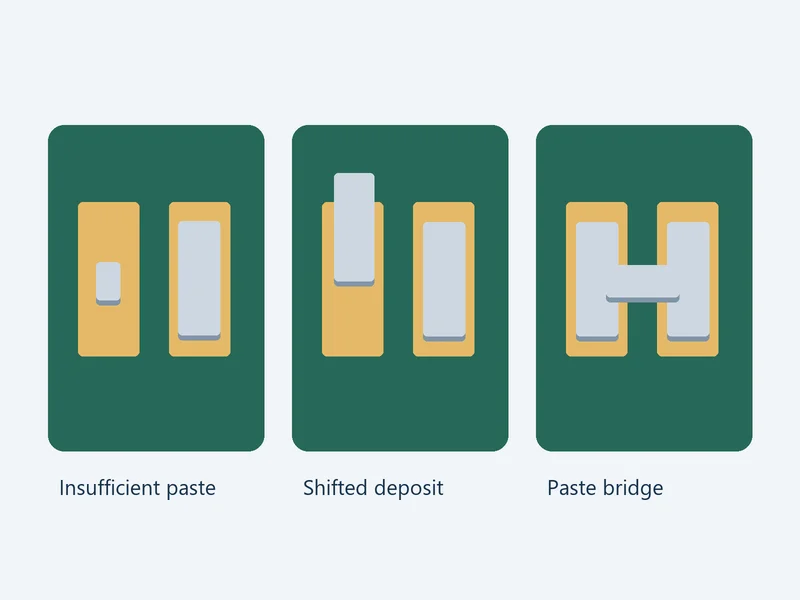
When a measurement falls outside its acceptance limits, we verify the board side, program revision and measurement location, then review the print. Repeated findings can prompt a check of stencil alignment, blocked apertures or print settings.
We hold affected boards for the agreed disposition and reinspect any boards approved for cleaning and reprinting before component placement.
Specify Images and Measurement Reports
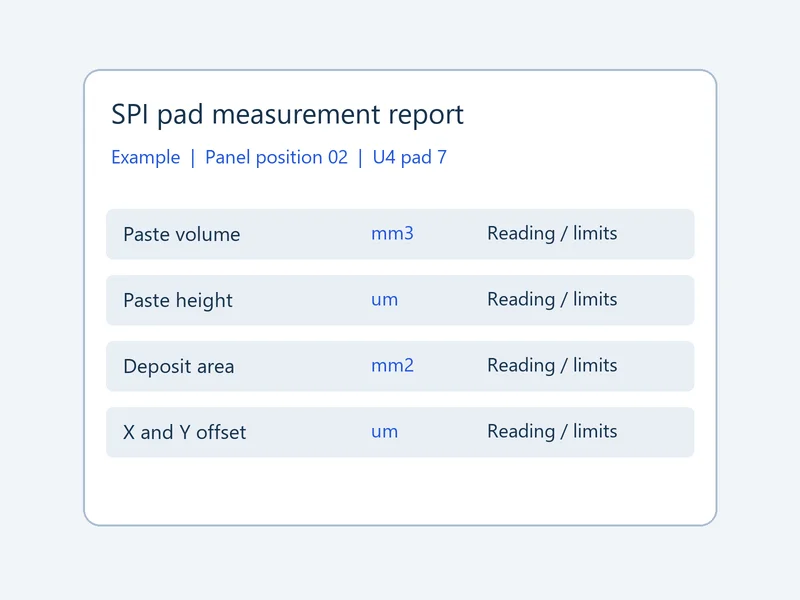
Tell us which pads and measurement fields you need in the report. Agree on whether to identify results by board, panel position or lot. Include the board side, assembly revision, measured values, limits and disposition as required.
For reprinted boards, specify whether the report must include both the original finding and the reinspection result.
Files for a 3D SPI Review
- Released assembly revision and sides to inspect
- Paste-layer data or stencil aperture drawing, including stencil revision
- Critical component reference designators and pad or aperture locations
- Project-specific limits, inspection coverage and reporting requirements
3D Solder Paste Inspection FAQs
Send the reference designator, board side and stencil aperture drawing. Mark the critical pads or individual windows and specify which measurements and limits apply.
Send the released paste layer, stencil design and critical pad list. Identify any pads that need tighter control. We review the target volume, height, area and offset for the relevant pad groups and agree with you on the units and acceptance limits before production.
We verify the measurement and inspect the print. Confirmed failures are held for the agreed disposition. If cleaning and reprinting are approved, we reinspect the new print before placement.
SPI measures the paste deposit before placement. After reflow, AOI can check visible assembly features and X-ray can examine specified hidden joints. Tell us which components and solder joints require follow-up inspection.
Send the revised aperture data, stencil revision and a list of changed locations. Identify changes to stencil thickness and affected board sides so we can review reference values and limits before using the new stencil.
Yes. Specify the critical pads, required images, measurement fields and units. Specify the board or lot identifier and the panel position if needed. If you need reinspection records, request both the original reading and the result after reprinting.
Discuss Your Solder Paste Inspection Requirements
Send your assembly revision, paste-layer data, critical pad list and any acceptance limits or reporting requirements so we can review the scope for your quote.