 Skip to content


Panel Separation for Individual-Board Delivery
Topline Circuit provides PCB depaneling support for prototype and production projects. We review bare or assembled panels, select a separation route and define the finished-edge and handling requirements with your team.
Send your panel files and assembly details before the panel design is released. We check tool access, component positions and board support so the separation process fits the product and its delivery requirements.
Plan the Separation with the Finished Assembly
Depaneling separates individual boards from a production or assembly panel. The panel can retain its units through assembly and selected tests before separation at the agreed process stage.
Review the populated board, not only the bare outline. Component heights, overhangs, connectors and sensitive packages affect where the tools and support fixture can reach.
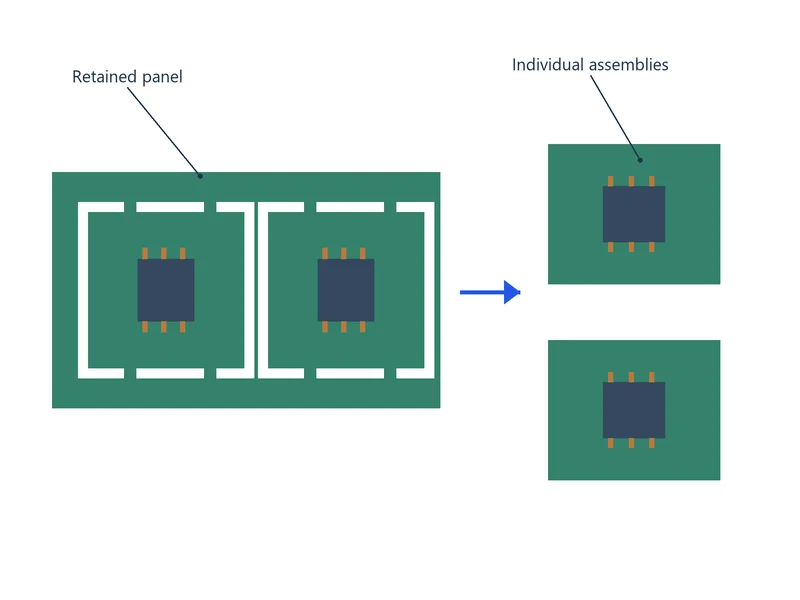
Select the Separation Route
| Route | Where it fits | What to review |
|---|---|---|
| V-score separation | Panels with suitable pre-scored straight separation lines. | Residual web, blade access, component clearance and support near the cut. |
| Router separation | Tab-retained panels, irregular outlines and edges requiring a machined finish. | Routing channel, cutter access, tab sequence, fixturing and debris removal. |
| Laser separation | Designs where a non-contact cutting route may suit the material and assembly. | Material response, cut depth, thermal effects, residue and access; confirm the route after reviewing the actual panel. |
Support the Board Near the Cut
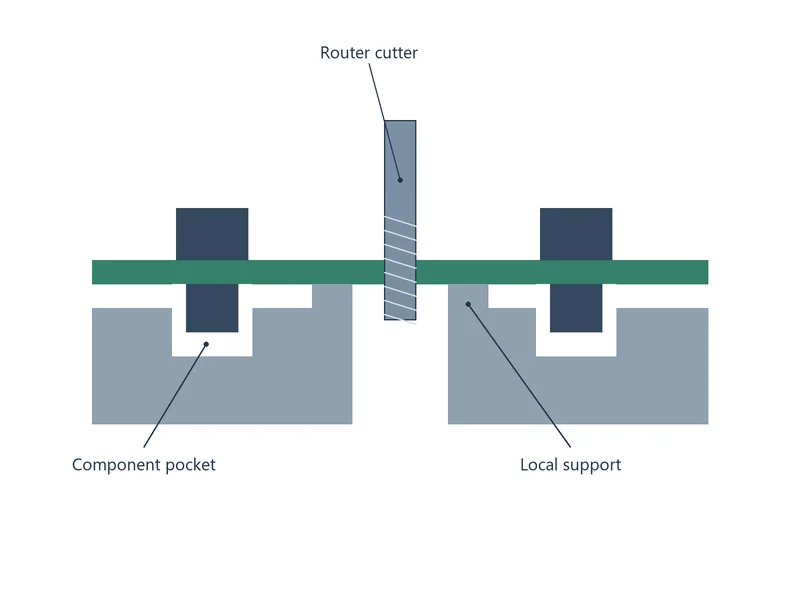
Fixtures and separation order help control board movement as the panel loses its attachment points. Provide the component locations on both sides so the support does not load parts or interfere with leads.
Review bending and twisting around ceramic capacitors and other sensitive components. When the product requires strain verification, agree on the measurement locations, method and acceptance criteria before production.
Define the Finished Edge and Delivered Form
| Requirement | What to specify |
|---|---|
| Panel condition | Bare board or populated assembly, material, thickness and existing tabs or score lines. |
| Separation stage | When the boards are separated relative to assembly, testing and other handling steps. |
| Tool and fixture access | Component bodies and heights on both sides, overhangs, connector keep-outs and support areas. Identify both references for each clearance, such as the cutter envelope to the nearest component body or lead. |
| Finished edge | Outline dimensions, tab remnants, burrs, exposed fibres and critical mating surfaces. |
| Cleanliness and inspection | Required debris control, post-cut checks and any product-specific electrical or functional verification. |
| Delivery | Individual boards or retained subpanels, identification, handling protection and packaging. |
Inspect, Handle and Pack the Separated Boards
Check the finished outline and edge condition against the drawing. Review nearby copper, vias, components and solder joints where the cutting process or observed damage warrants additional inspection.
Agree on cleaning, electrical or functional checks at the appropriate process stage. Specify ESD handling where applicable and retain individual board identification. Use trays or other agreed packaging to protect components and board edges during shipment.
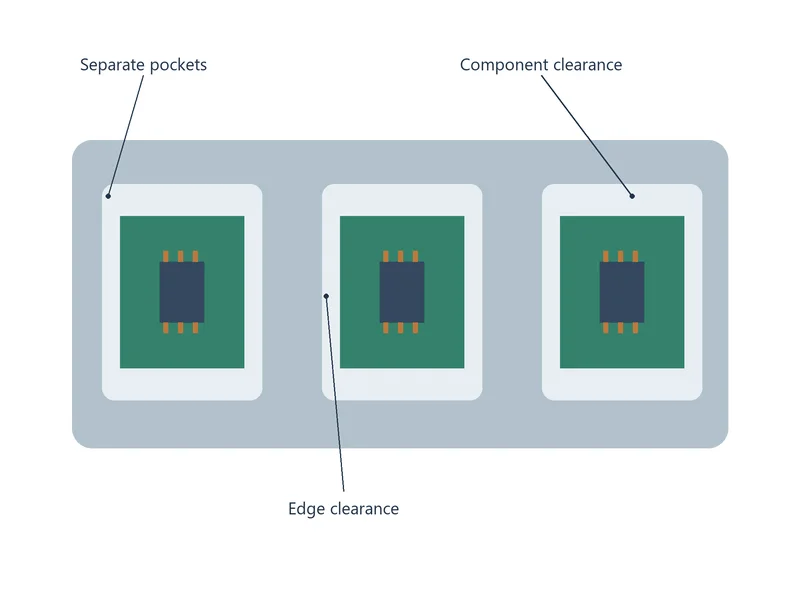
Coordinate Panel Preparation and Depaneling
V-scoring creates grooves and leaves a supporting web; depaneling is the later operation that separates the boards. Profile milling creates outlines and openings, while post-assembly router separation cuts the retained tabs or other specified connections.
Choose the separation method before fixing the panel arrangement. Our PCB assembly services can be coordinated with the required panel handling, testing and single-board delivery.
Files for a PCB Depaneling Quote
- Panel manufacturing data and a dimensioned mechanical drawing
- Material, stack-up, thickness and existing score or tab geometry
- Assembly drawing, placement data and component heights or a 3D model
- Sensitive components, restricted support areas and tool-access constraints
- Required final outline, edge condition and enclosure-fit dimensions
- Separation stage, test sequence, quantity and packaging requirements
Our PCB DFM review checks the panel construction with the available manufacturing data. Include the populated-board details for the separation review.
PCB Depaneling FAQs
Start with the existing score or tab geometry, material and populated-board layout. Check cutter or blade access, nearby sensitive components, support and the required edge result. Compare feasible routes against these requirements before considering production volume and cost.
Send the panel drawing, photos, component heights on both sides and the assembly status for review before shipment. We check access, support, cleanliness and inspection requirements before confirming the service scope. Do not assume a tool that fits the bare panel will clear the populated assembly.
Provide their package outlines, orientation and distance from the cut, including underside parts and overhangs. Review the support fixture and cutting route around them. If access or strain is unacceptable, consider a different separation route or a revised tab or component position before releasing the panel.
Provide the existing panel geometry and the fixed constraints. Review alternate tooling, local support and separation order for that panel. A trial may be needed to assess the edge and assembly condition; agree on the trial and acceptance criteria before committing the production lot.
Set aside the affected boards and pause the same separation operation while the cause is reviewed. Record locations, photos, panel revision, tooling and separation conditions. Inspect the board and nearby components using methods suited to the suspected damage. A passing functional test alone does not rule out a mechanical crack. Agree on acceptance, qualified repair or replacement before release.
State the required delivery form in the order and assembly drawing. Define whether testing occurs before or after separation, how each board retains its identification and what edge finish and packaging are required. Confirm any retained subpanels or rails separately.
Review Your Panel Separation Requirements
Send your panel and assembly files with the required delivery form. We will review the separation route, board support and finished-edge requirements and prepare a quotation.