
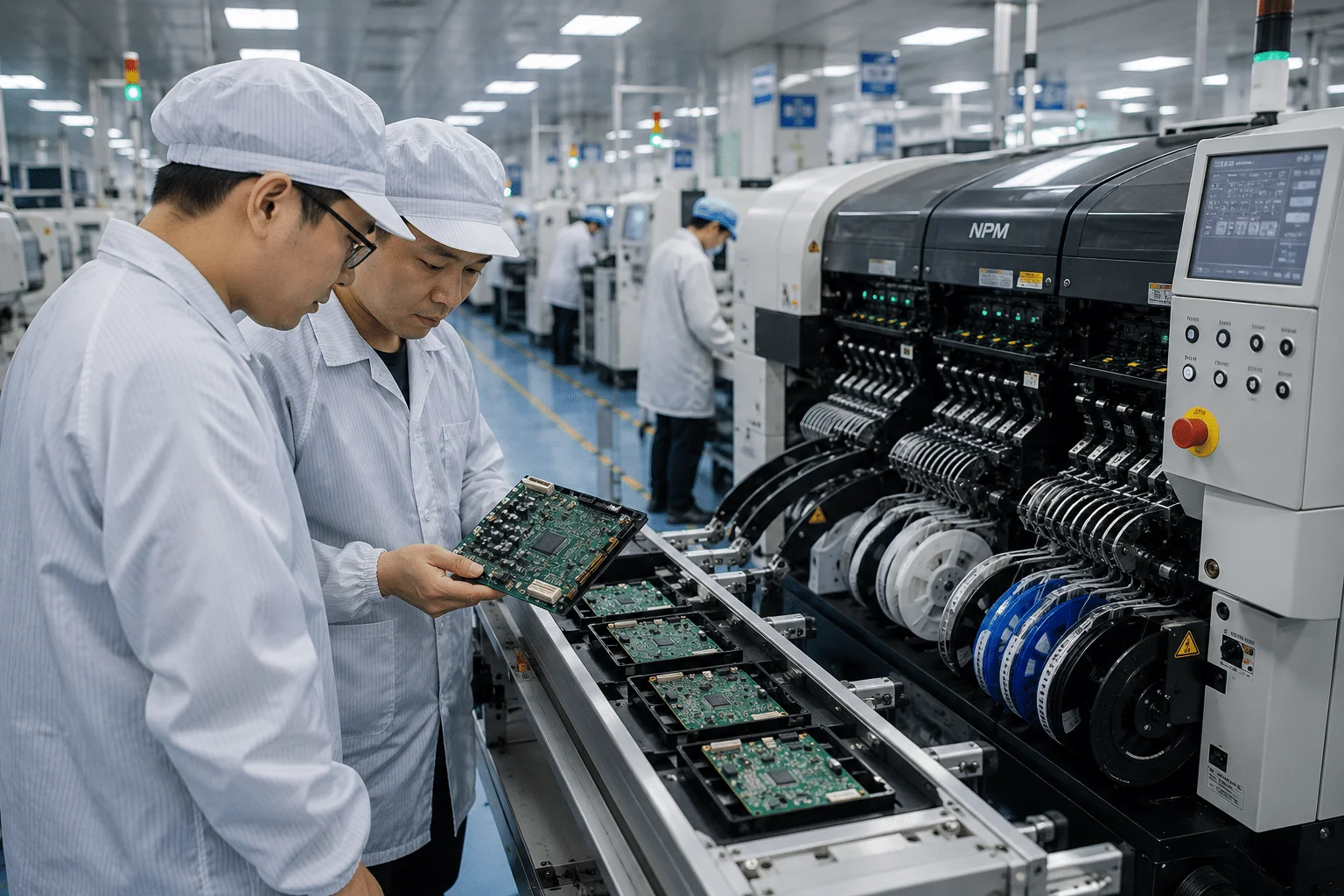
One of the most frustrating situations in electronics manufacturing is seeing a prototype perform perfectly while the production build struggles with quality issues, delays, and unexpected costs.
The prototype boards pass testing. Engineering approval is completed. Purchasing releases the order. Everything appears ready for production.
Then problems start appearing.
Assembly yield drops. Rework increases. Inspection time grows. Shipments are delayed.
For many OEMs, the question is not whether the design works. The question is why the same design behaves differently when production begins.
Why Production Is Different
Prototype builds and production builds rarely operate under the same conditions.
A prototype may involve only a few boards assembled under close engineering supervision. Every issue receives immediate attention.
Production is different. Hundreds or thousands of boards move through the manufacturing process. Small variations that seem insignificant during prototyping can become major production problems.
Common changes include:
- Different component lots
- Component substitutions
- New production panels
- Alternative SMT lines
- Different operators
- Higher production speed
A single defect found on one prototype board may affect hundreds of units during production.
The Most Common Production Problems
Most production failures are not caused by design errors. They are usually caused by process changes that occur after the prototype stage.
Component Substitution
Component shortages are common in electronics manufacturing.
To avoid long lead times, purchasing teams may approve alternative components.
Even when electrical specifications match, assembly performance can change.
Package tolerances, thermal characteristics, and coplanarity differences can affect solder joint quality.
Potential consequences include:
- Solder bridging
- Tombstoning
- Placement variation
- Functional test failures
PCB Warpage
Prototype quantities are often too small to expose warpage issues.
During production, different material batches and larger panel sizes may create additional stress during reflow.
The result can be:
- Open solder joints
- BGA connection issues
- Reduced assembly yield
- Increased rework
BGA Voiding
BGA assemblies often perform well during prototyping.
However, changes in solder paste volume, reflow profiles, and PCB flatness can increase void levels during production.
The largest cost is usually not the defect itself.
The larger impact comes from:
- Additional X-ray inspection
- Engineering investigations
- Customer concerns
- Delayed shipments
[Insert Content Image Here]
Why Costs Increase So Quickly
Many companies underestimate how expensive a production issue can become.
A prototype defect may require only a few minutes to repair.
The same defect repeated across 3,000 boards can create:
- Additional labor cost
- Inspection cost
- Production downtime
- Missed delivery dates
- Customer complaints
This is why successful manufacturers focus on prevention rather than correction.
Finding a problem during production is always more expensive than identifying it during validation.
Real Production Examples
Example 1
Prototype:
20 boards assembled using original components.
Production:
3,000 boards assembled using substitute components.
Result:
Assembly yield dropped because package dimensions were slightly different.
How to Prevent It:
Validate substitute components before production release.
Example 2
Prototype:
Engineering panel used during validation.
Production:
Panel redesigned for higher throughput.
Result:
Board warpage increased during reflow.
How to Prevent It:
Review production panelization before volume release.
Example 3
Prototype:
Defects manually reviewed by engineering staff.
Production:
Inspection relied on automated screening.
Result:
Recurring solder bridges increased rework volume.
How to Prevent It:
Review AOI findings from pilot production lots.
How to Evaluate a PCB Assembly Supplier
Many suppliers can build a successful prototype.
Far fewer can maintain stable quality during production.
When evaluating a pcb assembly supplier, focus on process control rather than equipment lists.
Ask how they manage:
- Component substitutions
- Process changes
- Traceability
- Corrective actions
- Pilot production validation
A supplier should be able to provide evidence rather than promises.
Questions to Ask Before Production
Before releasing a project for volume manufacturing, consider asking:
- Can prototype and production panel layouts remain identical?
- How are component substitutions approved?
- Can you provide AOI findings from pilot production?
- Can you provide X-ray reports for BGA assemblies?
- What process changes require customer approval?
- How are recurring defects tracked across production lots?
These questions often reveal production risks before they become expensive problems.
Common Misunderstandings
❌ The prototype passed, so production will be fine.
✅ Prototype success does not guarantee production stability.
❌ Approved substitute components carry little risk.
✅ Package and process differences can significantly affect assembly yield.
❌ Inspection will catch every problem.
✅ Inspection finds defects. Process control prevents them.
Planning for Production?
Moving from prototype pcb assembly to volume production involves more than increasing quantities. Changes in sourcing, panelization, assembly processes, and inspection methods can all affect manufacturing results.
Topline Circuit supports PCB fabrication, turnkey pcb assembly, engineering review, prototype validation, DFM analysis, component sourcing, and production risk assessment. Early review of Gerber files and BOM data can help identify potential production risks before manufacturing begins.