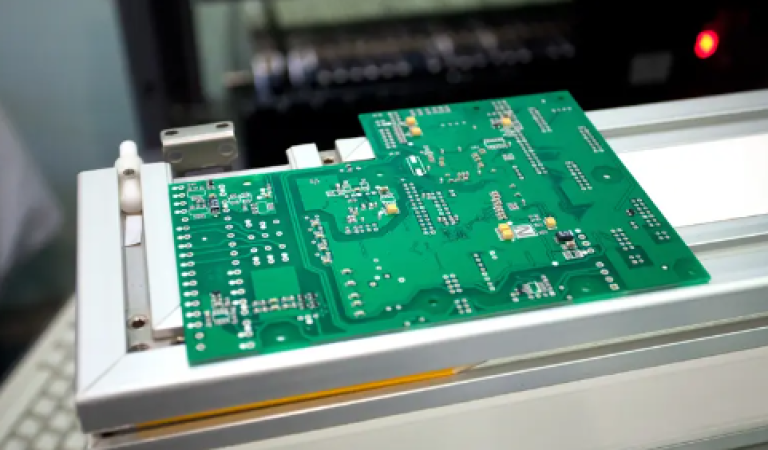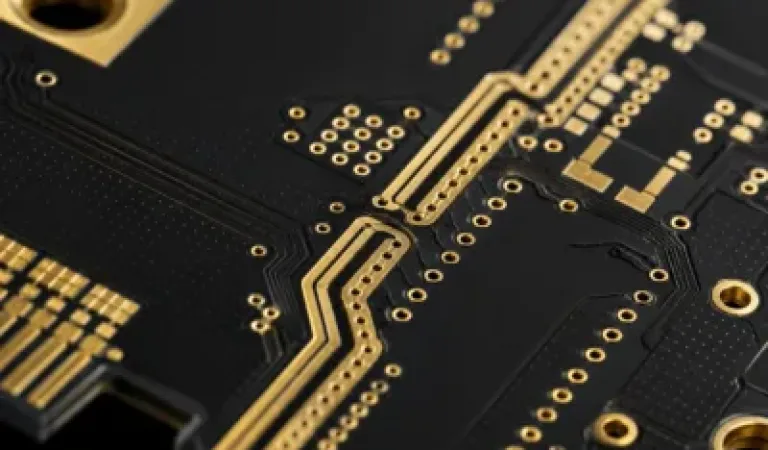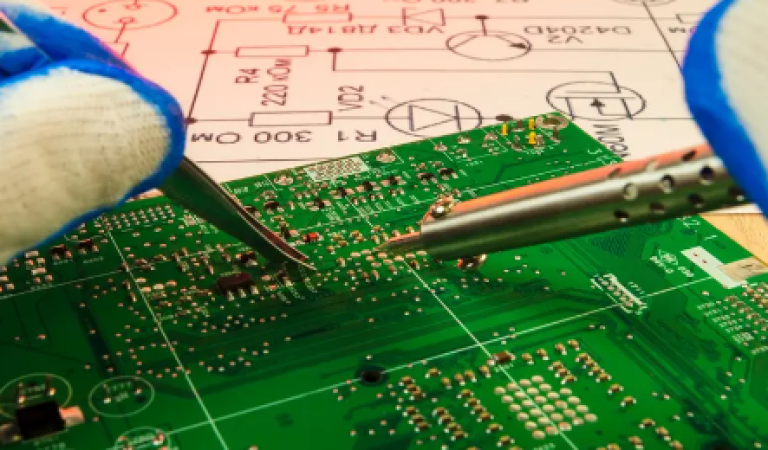

As electric vehicles upgrade towards high power, high integration, and long service life, the operating conditions of core electronic modules are harsh. High temperature, vibration, and other factors place extremely high requirements on the performance of printed circuit boards (PCBs). High glass transition temperature (high Tg) PCBs, with their excellent heat resistance, stability, and reliability, have become the first choice for on-board core modules, providing hardware support for the safe and efficient operation of electric vehicles.

Core Product Advantages
To meet the harsh operating requirements of core electric vehicle modules, this product has formed multiple advantages in core performance, fully adapting to the on-board environment and laying a solid foundation for the stable operation of modules.
- Ultra-high heat resistance: Tg ≥ 170℃ (up to 180-200℃ for high-end models), far exceeding the 135-150℃ of ordinary FR-4. It can withstand 245-260℃ lead-free soldering, tolerate continuous high temperatures from core on-board components, avoid board softening and delamination, and reduce the risk of high-temperature failure.
- Dimensional stability: Z-axis thermal expansion coefficient is 45-55ppm/℃, much lower than that of ordinary FR-4. It has small thermal deformation, reduces via fatigue and pad cracking, and ensures tight circuit bonding and stable signal transmission.
- Strong mechanical performance: Made of high-quality base material, the copper foil peel strength is ≥1.10N/mm, which can resist on-board vibration and impact, bear the torque of connectors and heat sinks, and avoid pad detachment and board fracture.
- Excellent electrical performance: Dielectric constant ≈4.2, low dielectric loss, capable of high-speed transmission above 25Gb/s, meeting the high-frequency signal needs of ADAS, radar and other modules, and reducing signal attenuation and interference.
- Reliable compatibility: Complies with industry standards, passes lead-free reflow soldering and thermal cycle tests, is compatible with lead-free processes and on-board environmental protection requirements, has a long service life, and reduces operation and maintenance costs.
The superposition of multiple core advantages makes this product far superior to ordinary PCBs in key dimensions such as heat resistance, stability, and reliability, becoming the core adaptation choice for electric vehicle modules.
Main Product Features
Combined with the diverse needs of electric vehicle modules, in addition to core performance, this product creates differentiated features to further improve adaptability and practicality, meeting the needs of different application scenarios.
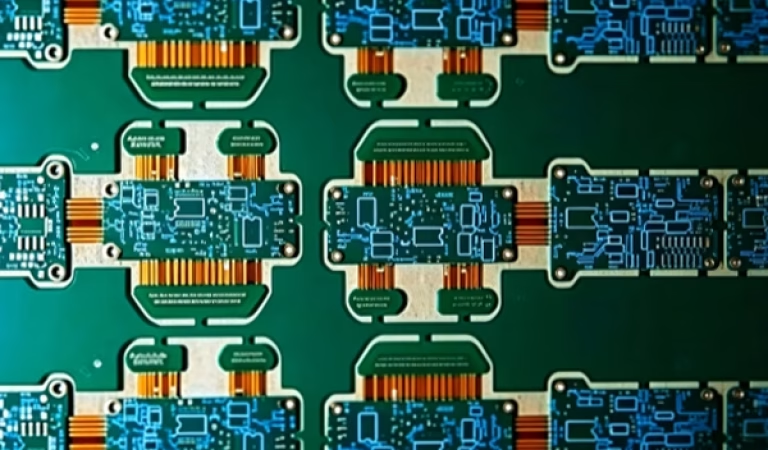
- Multi-layer expandability: Supports 4-16+ layer design, can achieve complex structures such as blind vias and buried vias, meets the needs of high-integration modules such as BMS and motor controllers, and reduces PCB volume.
- Excellent heat dissipation: Optimized base material formula, combined with thickened copper foil and thermal vias, quickly dissipates heat from components, relieves module overheating, and extends the service life of high-power modules.
- Strong weather resistance: Works stably for a long time in 85℃/85%RH environment, resists the erosion of on-board water vapor and oil stains, and adapts to different regional climates.
- Flexible customization: Can customize layers, thickness, surface treatment, etc. according to the size, power, and heat dissipation needs of on-board modules to match diverse needs.
Personalized features complement core performance, which not only solves the core pain points of on-board modules but also provides flexible solutions for different needs, enhancing product competitiveness.
Product Performance Parameter Comparison Table
| Performance Parameters | Our Product (High Tg PCB) | Ordinary FR-4 PCB | Advantage Description |
| Glass Transition Temperature (Tg) | 170-200℃ | 135-150℃ | Stronger heat resistance, avoiding high-temperature failure |
| Z-axis Thermal Expansion Coefficient (Below Tg) | 45-55ppm/℃ | 65-70ppm/℃ | Dimensional stability, reducing thermal stress failures |
| Dielectric Constant (εr@1GHz) | ≈4.2 | 4.3-4.5 | Stable signal transmission, supporting high frequency |
| Copper Foil Peel Strength (Cu 35µm) | ≥1.10N/mm | 1.05N/mm | Strong mechanical performance, not easy to lose pads |
| Soldering Temperature Resistance | Can withstand 260℃ lead-free reflow soldering | Hard to withstand soldering above 245℃ | Adapts to lead-free process, reducing soldering failure |
Frequently Asked Questions
Q1: High Tg PCBs have higher costs, why are they more recommended for electric vehicle modules?
A1: Although the base material cost of high Tg PCBs is slightly higher, they can withstand the harsh on-board environment, avoid problems such as delamination and board explosion that are easy to occur in ordinary FR-4, improve module reliability and service life, reduce the full-life cycle operation and maintenance costs, and meet on-board safety standards.
Q2: What is the Tg value of this product, and is it suitable for modules of different powers?
A2: The conventional Tg is ≥170℃, and 180℃, 200℃ grades can be customized; it supports 4-16+ layer customization, suitable for low-power on-board entertainment modules and various on-board modules such as high-power motor controllers and OBCs.
Q3: Can the product pass industry certifications to ensure safe use?
A3: The product complies with industry standards, passes lead-free reflow soldering, thermal cycle and other tests, meets RoHS and other environmental protection requirements, and can pass relevant certifications in the electric vehicle industry to ensure safe use.
Q4: What is the delivery cycle for customized products, and can it meet mass production needs?
A4: The delivery cycle for conventional products is 7-10 working days, and 10-15 working days for customized products; it has large-scale production capacity, supports small-batch sampling, and meets the mass production needs of manufacturers.
Application Scenarios
Relying on excellent core advantages and features, this product is widely suitable for various core electronic modules of electric vehicles, covering the full-scenario application from power control to intelligent driving.
- Battery Management System (BMS) Module: Tolerates high temperatures during battery charging and discharging, ensures stable signals, and avoids safety hazards such as battery overheating and overcharging.
- Motor Controller Module: Resists high working temperatures and driving vibrations, ensures accurate transmission of control signals, and improves motor operation efficiency and reliability.
- On-board Charger (OBC) Module: Withstands high temperatures during charging, ensures charging efficiency and safety, and adapts to OBC modules of different powers.
- ADAS Intelligent Driving Module: Ensures stable transmission of high-frequency signals such as radar and cameras, adapts to complex road conditions, and improves driving safety.
- On-board Entertainment and Control Module: Resists moisture and corrosion, extends service life, ensures precise fit with on-board interior, and improves user experience.
The full-scenario adaptability enables this product to meet the needs of different modules of electric vehicles, providing comprehensive support for the stable operation of the entire vehicle electronic system.
We focus on the R&D, production and sales of high Tg printed circuit boards for electric vehicle modules, meeting the upgrading needs of the electric vehicle industry with high-quality products. For more information on product parameters, customization plans or quotations, please contact us through the following methods:
WhatsApp: +86 13425156463
Email: sales@toplinecircuit.com