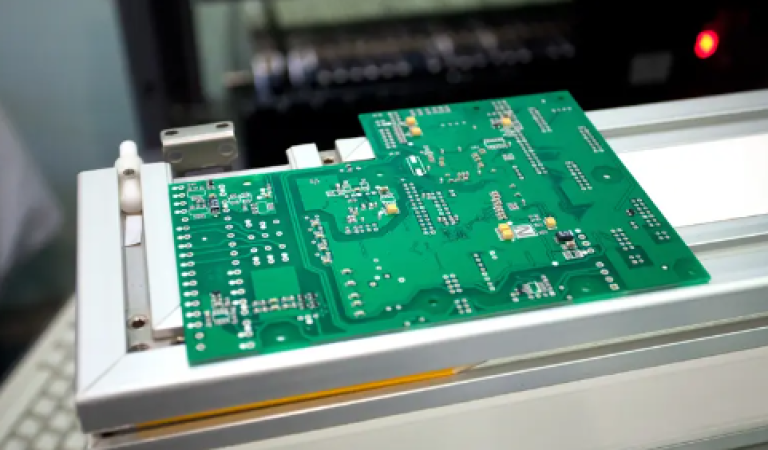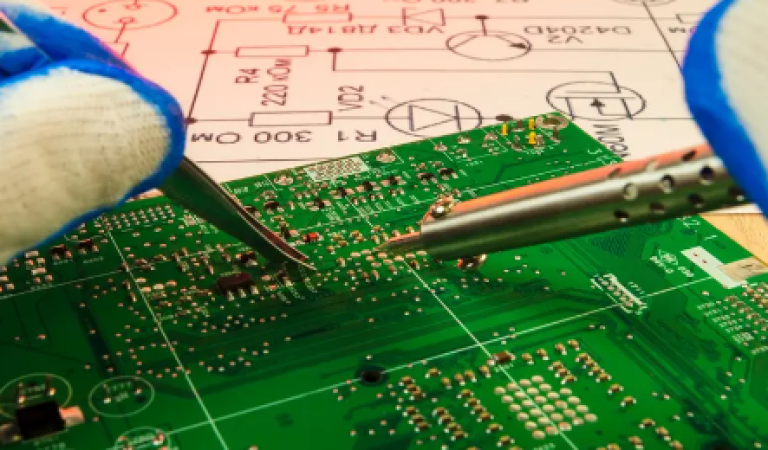

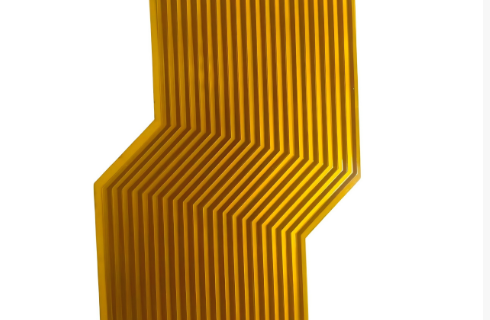
Keyboard FPCs are used in laptops, mechanical keyboards, ultra-thin keyboards, and industrial control terminals.
Compared with rigid PCBs or cable assemblies, FPCs are thinner and easier to bend. They fit better in narrow keyboard structures and help reduce connectors.
A good keyboard FPC helps keep the key response stable during repeated pressing. It also makes assembly easier in thin or compact keyboard products.
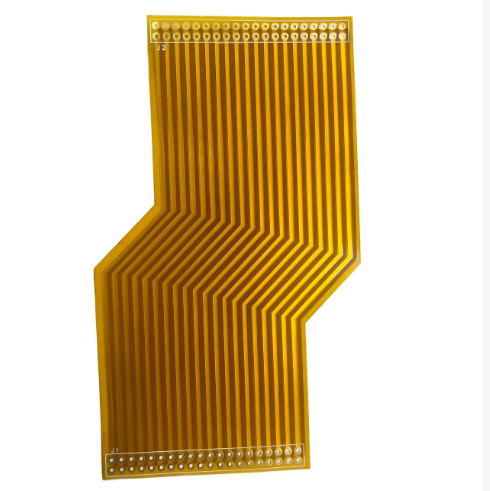
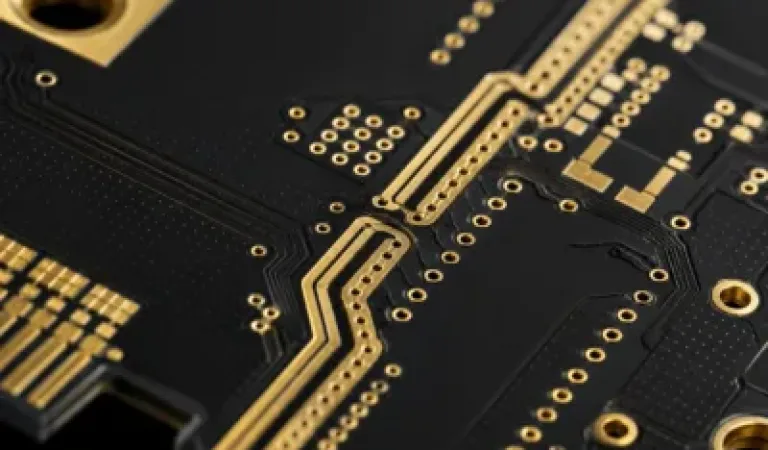
Among them, high-performance keyboard FPCs using Immersion Gold (Immersion Gold/ENIG) surface treatment are widely used in high-end keyboards, industrial keyboards, medical input devices, gaming equipment, and highly reliable control systems because of their excellent oxidation resistance, stable contact performance, and strong soldering reliability. Especially in scenarios involving frequent key triggering, long-term insertion and removal, humid environments, or complex electronic interference, the immersion gold process can effectively reduce the risk of poor contact and improve overall circuit connection stability.
What is a High-Performance Keyboard FPC with Immersion Gold?
What is a Keyboard FPC?
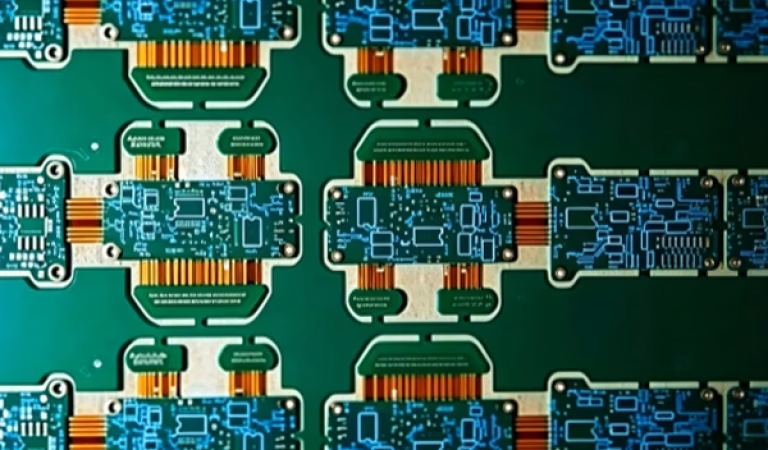
A keyboard flexible circuit board is a circuit connection structure made with flexible substrate materials, mainly used for key matrices, circuit signal transmission, and connections between the motherboard and input modules. Compared with traditional rigid PCBs, FPCs can bend, fold, and be installed across spaces freely, making them especially suitable for ultra-thin structures, complex layouts, and multi-area connection requirements. Today, flexible circuits are not only responsible for conducting signals, but also for maintaining signal stability, reducing delays, and preventing false triggering. Therefore, for high-end devices, a Keyboard FPC is no longer just a “connection cable,” but an important component that affects the input experience.
What is Immersion Gold (Immersion Gold) surface treatment?
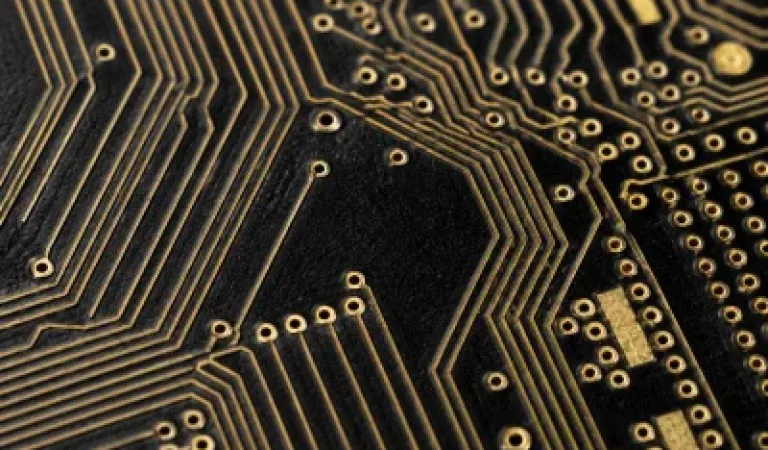
Immersion Gold, also known as ENIG (Electroless Nickel Immersion Gold), is a PCB surface treatment process that deposits a very thin gold layer on top of a nickel layer. It provides a flatter, more stable, and oxidation-resistant metal surface for pads and contact areas. Compared with ordinary HASL or OSP processes, immersion gold is more suitable for long-term use, high-frequency contact, and precision soldering applications. For keyboard flexible circuits, immersion gold not only improves soldering reliability, but also reduces contact resistance during long-term use, making key response more stable.
Main Features of High-Performance Keyboard FPCs with Immersion Gold
| Main Feature | Technical Performance | Core Advantage |
| Flexible structure | Bendable and foldable | Suitable for ultra-thin and complex structural designs |
| Immersion gold surface treatment | ENIG process | Improves oxidation resistance and contact stability |
| High-density circuitry | Fine circuit design | Supports more keys and complex matrix structures |
| Lightweight design | Ultra-thin flexible substrate | Reduces device weight and space usage |
| High reliability | Stable under long-term pressing | Reduces the risk of key failure |
| Excellent soldering performance | Flat pad surface | Improves assembly stability |
Application Areas of High-Performance Keyboard Flexible Circuits
High-performance immersion gold keyboard FPCs are widely used in laptops, mechanical keyboards, industrial control keyboards, medical equipment input systems, smart terminals, gaming devices, and portable electronic products. Especially in devices requiring high-frequency input, high stability, and long lifespan, immersion gold flexible boards provide a more reliable signal connection solution.
How are High-Performance Keyboard FPCs with Immersion Gold Manufactured?
· Requirement Analysis and Structural Planning
During the keyboard flexible circuit design stage, it is first necessary to determine the number of keys, key arrangement method, installation space, bending areas, and connector positions. Different devices have very different requirements for Keyboard FPCs. For example, gaming keyboards focus more on response speed and durability, while ultra-thin laptops pay more attention to thickness and space utilization. Therefore, before formal design begins, circuit routing must be planned according to the product structure to avoid later problems such as bending interference, connector misalignment, or signal interference.
· Flexible Circuit Design and Matrix Layout
Keyboard flexible circuits usually use matrix-based circuit designs to identify key inputs through row and column scanning. To ensure signal stability, routing paths must be arranged properly, crossover interference reduced, and line length consistency controlled. For high-density keyboards, higher routing precision is also required to support more complex key structures. In flexible areas, sharp-angle routing and overly dense layouts should be avoided to reduce the risk of cracking after long-term bending.
· Immersion Gold Surface Treatment Process
After circuit fabrication is completed, the pad areas undergo ENIG immersion gold treatment. This process usually includes electroless nickel plating and immersion gold deposition. The nickel layer provides mechanical strength and barrier protection, while the gold layer prevents oxidation and improves conductive contact performance. Compared with ordinary surface treatments, the immersion gold layer is flatter and more suitable for precision soldering and long-term key contact areas.
· Finished Product Inspection and Lifespan Testing
Before shipment, high-performance keyboard FPCs usually undergo continuity testing, key cycle testing, bending testing, and environmental reliability testing. For high-end products, contact resistance variation and long-term fatigue stability are also tested to ensure stable input performance even after extended use.
| Manufacturing Step | Function |
| Requirement analysis | Determines keyboard structure and interface solution |
| Circuit layout | Plans matrix and signal paths |
| Flexible circuit fabrication | Completes fine circuit formation |
| ENIG immersion gold treatment | Improves contact stability |
| Finished product testing | Verifies reliability and lifespan |
How to Ensure Stable Signal Transmission in Keyboard Flexible Circuits?
Although keyboard flexible circuits mainly transmit control signals, they may still be affected by circuit interference, unstable contact, and resistance variations under high-frequency input and complex electronic environments. Therefore, the design stage must focus on circuit layout, copper thickness, grounding paths, and interface stability. More optimized matrix layouts are usually adopted to avoid excessively long or concentrated signal lines. At the same time, optimizing copper foil thickness and reducing unnecessary vias help reduce signal attenuation and poor contact risks. For high-end keyboards, shielding designs and anti-interference optimization are also added to ensure stable response during rapid input.
What Advantages Does the Immersion Gold Process Have Compared with Other Surface Treatment Processes?
The greatest advantage of immersion gold lies in its ability to provide a more stable metal contact surface. Compared with HASL tin spraying, ENIG surfaces are flatter and more suitable for fine-pitch soldering. Compared with OSP processes, immersion gold has stronger oxidation resistance and is less likely to fail due to long-term storage or humid environments. For keyboard flexible circuits, immersion gold also reduces changes in contact resistance after prolonged pressing and improves long-term usage stability. Therefore, immersion gold processes are generally more popular than ordinary processes in high-end keyboards, industrial control equipment, and products requiring long-term reliable operation.
What Factors Affect the Lifespan of Keyboard Flexible Circuits?
Many factors affect the lifespan of keyboard flexible circuits, including material quality, circuit design, bending frequency, usage environment, and surface treatment methods. If the circuit design in flexible areas is unreasonable, metal fatigue may occur after long-term bending. If the surface treatment lacks oxidation resistance, poor contact may result from humidity or contamination. In addition, temperature changes, frequent pressing, and mechanical stress gradually affect circuit stability. Therefore, high-performance keyboard FPCs usually adopt more bend-resistant copper foil, more stable PI substrates, and immersion gold processes to improve overall lifespan.
Technical Optimization Solutions
| Technical Direction | Optimization Method | Target Effect |
| Signal stability | Optimized matrix layout | Reduces interference and false triggering |
| Surface treatment | ENIG immersion gold | Improves contact stability |
| Flexible durability | Optimized bending area design | Extends service life |
| Copper foil control | Proper copper thickness design | Improves conductive stability |
| Oxidation resistance | Metal protective layer | Reduces environmental impact |
| Fine circuitry | High-precision circuit processing | Supports high-density key layouts |
What Materials Should Be Used for High-Performance Keyboard Flexible Circuits?
· Flexible Substrate Selection
High-performance keyboard FPCs usually use Polyimide (PI) as the base material. PI has excellent heat resistance, flexibility, and dimensional stability, allowing it to adapt to long-term bending and high-frequency usage environments. Compared with ordinary materials, PI is less likely to deform or crack during long-term input applications.
· Copper Foil Material Selection
Keyboard flexible circuits generally use high-quality rolled annealed copper (RA copper) or electrolytic copper. For products requiring long-term bending, RA copper is more suitable for dynamic bending areas because of its better ductility. Proper copper thickness design can also balance flexibility and conductivity.
· Surface Treatment Material Selection
ENIG immersion gold processing is one of the most common choices for high-performance keyboard FPCs. The gold layer has excellent oxidation resistance and can maintain stable contact performance during long-term use. At the same time, the nickel layer enhances mechanical strength and improves pad durability.
| Material Area | Common Material | Main Function |
| Flexible substrate | PI (Polyimide) | Heat resistance and bend resistance |
| Copper foil | RA copper / electrolytic copper | Signal transmission |
| Surface treatment | ENIG immersion gold | Oxidation resistance and stable contact |
| Cover layer | Coverlay film | Protects circuitry |
| Reinforcement material | FR4 / steel sheet | Improves local strength |
Why Does Material Selection Affect Keyboard Feel and Lifespan?
Many customers focus only on key structure while ignoring the influence of FPC materials on the input experience itself. In reality, materials not only determine circuit lifespan, but also affect key triggering stability, rebound consistency, and long-term reliability after continuous input. If the material lacks sufficient heat resistance, if copper foil fatigue resistance is poor, or if the surface treatment oxidizes easily, the keyboard may experience failure or slow response after long-term use, even if the key structure design itself is reasonable.
Why Do High-End Keyboards Prefer Immersion Gold Flexible Circuits?
Many customers notice that high-end mechanical keyboards, industrial keyboards, and medical input devices prefer immersion gold FPCs instead of ordinary flexible circuits. The reason is that high-end devices usually require longer lifespan, more stable input performance, and lower failure rates. Ordinary surface treatments are prone to unstable contact after long-term use due to oxidation, wear, or environmental effects, while immersion gold processes provide a more stable metal contact surface that maintains excellent conductivity under frequent pressing and prolonged usage. At the same time, ENIG surfaces are flatter and more suitable for high-precision soldering and complex keyboard structures, making them more advantageous in highly reliable products.
Why Choose Us?
We specialize in high-performance flexible circuit board solutions and can provide more suitable Keyboard FPC customization solutions according to customers’ keyboard structures, key quantities, space limitations, and usage environments. Whether for ultra-thin laptop keyboards, industrial control keyboards, gaming devices, or medical input systems, we can optimize circuit layout, flexible structures, and surface treatment processes according to product requirements.During manufacturing, we focus more on long-term stability rather than only basic conductivity performance. Through fine circuit processing, stable ENIG immersion gold processes, and strict reliability testing, we help customers reduce later-stage failure rates and improve overall product quality and lifespan.
High-performance keyboard flexible circuits with immersion gold are no longer just simple connection lines, but important core components that affect input stability, service life, and product quality. As electronic products continue to become thinner and key structures become more complex, traditional connection methods can no longer meet modern devices’ requirements for space efficiency, stability, and durability. Keyboard FPCs using ENIG immersion gold processes not only improve oxidation resistance and soldering stability, but also maintain more stable contact performance in long-term high-frequency input environments, thereby reducing key failure, input delay, and poor contact problems.
For laptops, mechanical keyboards, industrial equipment, and medical electronic products, high-performance flexible circuits not only improve product reliability, but also help optimize overall structural design. Through proper material selection, fine circuit design, and more stable surface treatment processes, product lifespan can be effectively extended while improving user experience. If your project is looking for a more stable and durable keyboard flexible circuit solution, feel free to send us your product requirements, structural dimensions, and technical specifications. We will provide more suitable design recommendations and quotation support according to your application scenario, helping your product enter mass production more smoothly.