

Product Specifications
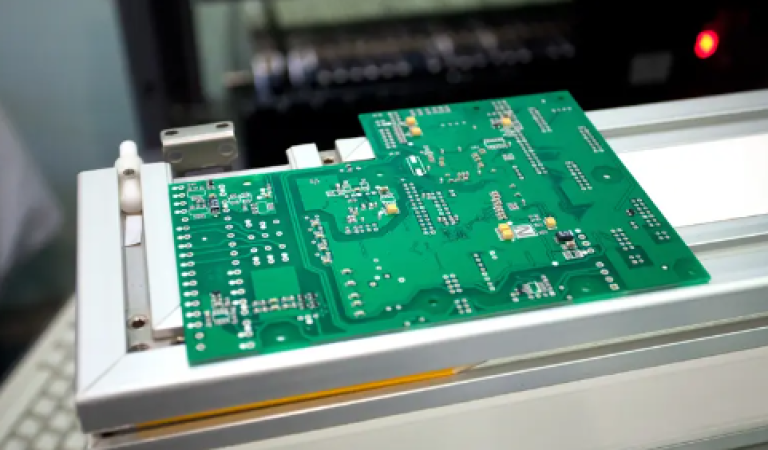
The final FR4 PCB specification should be confirmed from the project files. Material grade, layer count, copper weight, board thickness, surface finish, and testing requirements can vary by application.
| Item | Requirement |
|---|---|
| Base Material | FR4 laminate |
| Layer Count | Project dependent |
| Board Thickness | Project dependent |
| Copper Weight | Project dependent |
| Surface Finish | To be confirmed before quotation |
| Solder Mask Color | Project dependent |
| Stack-Up | To be confirmed during DFM review |
| Controlled Impedance | When required by the design |
| Electrical Testing | Based on project requirements |
| Assembly Support | For PCBA projects, if applicable |
Material Grade Should Match the Application
FR4 is a broad material category. Different grades can have different thermal and electrical properties. The selected material should match the operating environment, electrical requirements, and assembly conditions.
Stack-Up Should Match the Routing Requirement
A simple FR4 PCB board may only need a standard structure. A multilayer, impedance-controlled, or power-related design may require a defined stack-up before fabrication.
Product Advantages
- Suitable for many general electronic applications
- Supports practical routing and board structures
- Compatible with common fabrication processes
- Allows material review for different environments
- Can support multilayer PCB construction
- Can be prepared for later PCB assembly
FR4 remains a practical starting point for many electronic projects because it can support general circuit structures without requiring specialized materials in every case. The correct choice still depends on the product’s signal, thermal, power, and mechanical requirements.
Supports General Electronic Product Development
FR4 PCB manufacturing is suitable for products that need stable board construction but do not require a specialized RF, flexible, metal-core, or heavy-copper solution.
Works With Different Board Structures
FR4 can be considered for single-layer, double-layer, and multilayer designs. The final construction should be confirmed from the routing density, power distribution, and signal requirements.
Product Applications
FR4 PCB boards are commonly considered for general electronic products where the material and stack-up are appropriate for the application.
- Industrial control equipment
- Embedded controller boards
- Communication interface boards
- Power supply control boards
- Sensor modules
- Automation products
- Test and measurement equipment
- IoT devices
- Consumer electronic products
- General interface and control boards
Industrial Control and Automation Products
Industrial boards often need organized signal routing, stable mechanical construction, and practical component placement. FR4 may be suitable when the thermal, electrical, and environmental requirements are confirmed during engineering review.
Embedded and Communication Interfaces
FR4 PCB boards can support embedded processors, connectors, interface circuits, and communication modules. Projects with high-speed or impedance-sensitive signals should have the stack-up reviewed before fabrication.
Manufacturing Considerations
FR4 material is widely used, but the manufacturing package still needs clear engineering information. A material name alone does not define the final board construction.
Gerber Files Must Include Complete Fabrication Data
The Gerber package should include all copper layers, solder mask layers, silkscreen layers, board outline data, and relevant fabrication notes. Missing layer data or unclear revision control can create unnecessary engineering questions.
For Gerber preparation, fabrication notes, and DFM review, add an internal link on PCB design.
Material Requirements Should Be Stated Clearly
If the board has higher thermal requirements, repeated temperature cycling, or special electrical needs, these requirements should be included with the fabrication files. Do not assume that all FR4 materials perform the same way.
For higher-temperature material review, add an internal link on High Tg PCB.
Controlled Impedance Needs Stack-Up Review
When the design includes impedance-sensitive traces, the target impedance, trace geometry, reference planes, material construction, and dielectric thickness should be reviewed together. A fabrication note alone may not be enough.
For impedance-related projects, add an internal link on Impedance Controlled PCBs.
Assembly Requirements Should Be Reviewed Early
A bare FR4 PCB may be ready for fabrication but still create issues during assembly if component footprints, solder mask openings, polarity marks, or test access are unclear. Assembly files should be reviewed before the board moves to the PCBA stage.
For BOM review, pick-and-place files, assembly drawings, and test planning, add an internal link on PCBA processing.
Files Required for Quotation
A useful quotation review requires more than a board image or a material name. The project package should show the intended board structure and any special fabrication or assembly requirements.
- Gerber files with complete layer data
- Drill files and finished-hole notes
- Board outline and fabrication drawing
- Stack-up and material requirements
- Controlled impedance notes, when required
- BOM and assembly files for PCBA projects
- Quantity requirements for quotation review
What is an FR4 PCB?
An FR4 PCB uses a glass-reinforced epoxy laminate as its base material. It is commonly used for general electronic applications where the material properties match the project requirement.
Can FR4 be used for multilayer PCB manufacturing?
FR4 can be used for multilayer PCB construction. The final stack-up, material grade, copper distribution, and routing requirements should be reviewed from the project files.
Is FR4 suitable for high-frequency applications?
Standard FR4 may not be suitable for every RF or high-frequency design. The required signal performance, stack-up, material behavior, and routing geometry should be reviewed before material selection.
When should controlled impedance be considered?
Controlled impedance should be considered when the design includes impedance-sensitive signal traces. The requirement should be defined with the stack-up and fabrication information.
What files should be prepared before quotation?
Gerber files, drill data, board outline information, fabrication notes, stack-up requirements, and quantity details are recommended. For PCBA projects, include the BOM, placement data, assembly drawing, and test requirements where available.
Related Articles
Only publish these as links after the related article is live.
- Planned Related Article: What Is FR4 PCB Material and How to Choose the Right Grade
- Planned Related Article: Multilayer PCB Stack-Up Design Issues That Affect Performance
- Planned Related Article: Controlled Impedance PCB Design Considerations
- Planned Related Article: How to Evaluate a PCB Manufacturer Before Production
Preparing Your FR4 PCB Project
FR4 PCB manufacturing starts with confirming whether the material and board structure fit the real application. Gerber files, drill data, stack-up notes, material requirements, and fabrication instructions should describe the final design intent.
For projects that will move into assembly, prepare the BOM, assembly drawing, and test requirements early. This gives the engineering review a clearer basis for checking both fabrication and assembly considerations.
To request a quotation, please send your Gerber files, fabrication notes, stack-up requirements, and quantity details to sales@toplinecircuit.com.