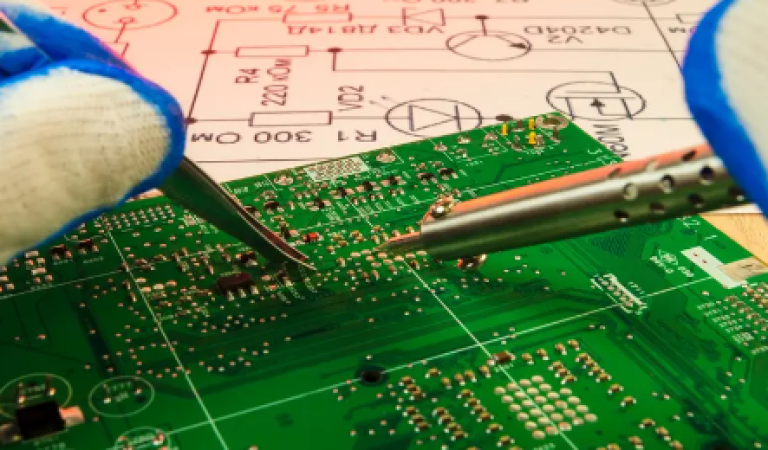

With the rapid development of AI servers, 5G communication systems, new energy vehicles, and smart electronic devices, modern electronics are moving toward higher speed, smaller size, and greater integration density. Traditional multilayer PCBs are gradually becoming insufficient in terms of routing flexibility, signal integrity, and space utilization for complex electronic systems. As a result, Any Layer High Density Interconnect (HDI) PCBs have become a key product in advanced electronics manufacturing. They enable direct interconnection between any layers, improving routing flexibility and optimizing electrical performance, allowing complex electronic devices to achieve greater functionality and more stable operation within limited space.
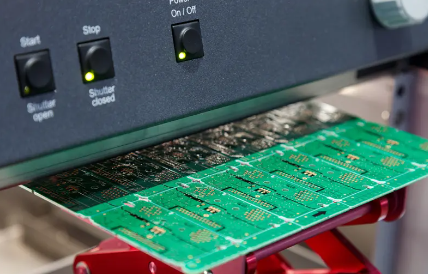
What Is an Any Layer High Density Interconnect PCB?
An Any Layer High Density Interconnect PCB is a high-density circuit board manufactured using advanced microvia interconnection technology. Its core feature is that any layer can be directly connected through laser-drilled microvias, rather than being limited to connections between adjacent layers as in traditional PCB structures.
Compared with conventional multilayer PCBs, Any Layer HDI PCBs provide higher routing density, more flexible structural design, and improved signal transmission performance, making them widely used in high-performance electronic devices.
Key characteristics include:
- Any-layer interconnection structure: Enables flexible electrical connections between different layers, improving complex circuit layout capability.
- Higher routing density: Supports more precise circuit designs and higher component integration.
- Smaller product size: Reduces space occupied by traditional through-holes, making it suitable for compact electronic devices.
- More stable signal transmission: Minimizes signal loss and electromagnetic interference while improving high-speed operation stability.
- Higher reliability: Multilayer structures and precision manufacturing processes improve long-term operational stability.
Any Layer HDI PCBs typically combine laser drilling, blind and buried via technology, and high-precision lamination processes to meet the demands of high-speed, high-frequency, and highly integrated electronic products.
Core Process Comparison of Any Layer HDI PCB Products
Different manufacturing technologies directly affect PCB performance and application areas. The following table compares common processes used in Any Layer HDI PCB products:
| Process Type | Main Function | Technical Features | Typical Applications |
| Laser Microvia Technology | Achieves interlayer connections | Smaller via size and higher precision | High-density PCBs |
| Blind and Buried Via Process | Improves routing efficiency | Reduces internal space occupation | Multilayer HDI structures |
| Sequential Lamination Process | Enhances structural stability | Multiple lamination cycles | High-layer-count PCBs |
| High-Frequency Materials | Improves signal integrity | Reduces high-speed signal loss | Communication and server equipment |
| High TG Materials | Enhances thermal resistance | Suitable for high-temperature environments | Industrial and automotive electronics |
| ENIG Surface Finish | Improves soldering reliability | Stronger oxidation resistance | Precision electronic devices |
Manufacturing Process of Any Layer HDI PCB Products
The manufacturing process of Any Layer HDI PCBs is highly complex and requires advanced equipment precision and strict process control.
During the initial production stage, the PCB layer count, routing density, and microvia structure must be carefully planned to ensure manufacturing stability and long-term product reliability.
- PCB structure design: Plans layer stack-up and routing layout based on product requirements.
- Material preparation: Selects high TG, high-frequency, or low-loss substrates.
- Laser drilling: Uses high-precision equipment to create microvia structures.
- Via filling and plating: Completes interlayer conductivity and strengthens connection reliability.
- Multilayer lamination: Forms complex high-density PCB structures.
- Pattern transfer and etching: Creates fine circuit patterns.
- Surface finishing: Uses ENIG or OSP processes to improve soldering performance.
- AOI and X-ray inspection: Detects circuit defects and internal structural quality.
- Electrical performance testing: Verifies PCB conductivity and operational stability.
Because Any Layer HDI PCBs have more complex structures, they require higher standards for manufacturing equipment, engineering capability, and quality control systems.
Why Choose Our Any Layer HDI PCB Products?
For high-end electronic devices, PCBs not only determine system performance but also directly affect long-term stability and reliability. High-quality Any Layer HDI PCB products help customers achieve higher integration density, more stable operation, and more flexible product designs.
- High-precision manufacturing capability: Supports high-layer-count, multi-stage HDI, and complex microvia structures.
- Fast prototyping support: Shortens development cycles and improves product development efficiency.
- Strict quality control: Uses AOI, X-ray, and electrical testing to ensure product reliability.
- Mass production capability: Supports prototypes, small batches, and large-scale production requirements.
- Enhanced signal transmission performance: Optimized routing structures reduce high-speed signal loss.
- Extensive industry application experience: Suitable for communication systems, automotive electronics, industrial control, and AI devices.
- Stable delivery capability: Optimized production management and supply chain systems improve product consistency.
Our Any Layer HDI PCB products are designed to meet the demanding requirements of high-speed, high-frequency, high-density, and highly reliable electronic equipment.
Application Areas of Any Layer HDI PCB Products
As electronic systems become increasingly complex, Any Layer HDI PCBs are now widely used across many advanced industries.
- Smartphones and consumer electronics: Supports compact designs and high integration density.
- 5G communication equipment: Meets high-speed and high-frequency transmission requirements.
- AI servers and data centers: Supports complex high-speed computing systems.
- New energy vehicles: Used in BMS systems, electronic control systems, and intelligent driving modules.
- Medical electronic devices: Provides high reliability and long-term operational stability.
- Aerospace equipment: Suitable for harsh environments and high-reliability applications.
High-density interconnect technology has become an important foundation for next-generation high-performance electronic devices.
Future Trends: Toward Higher Density and Greater Performance
As electronic devices continue evolving toward miniaturization and higher performance, Any Layer HDI PCBs are also advancing rapidly. Future manufacturing technologies will focus more on ultra-fine circuit processing, higher layer counts, and lower signal loss control, while integrating intelligent manufacturing and automated inspection systems to improve production efficiency and product stability. High-frequency materials, advanced packaging technologies, and high-precision laser processing will further expand the application of Any Layer HDI PCBs in AI systems, autonomous driving, and high-performance communication equipment.
In modern advanced electronics manufacturing, Any Layer High Density Interconnect PCBs have become a critical foundation for improving device performance and integration capability. They not only meet the demands of complex electronic systems for high speed, high frequency, and miniaturization, but also significantly improve product stability and overall reliability. For companies pursuing high-performance and highly integrated electronic products, choosing high-quality Any Layer HDI PCB products will become an important step toward enhancing market competitiveness and driving product innovation.