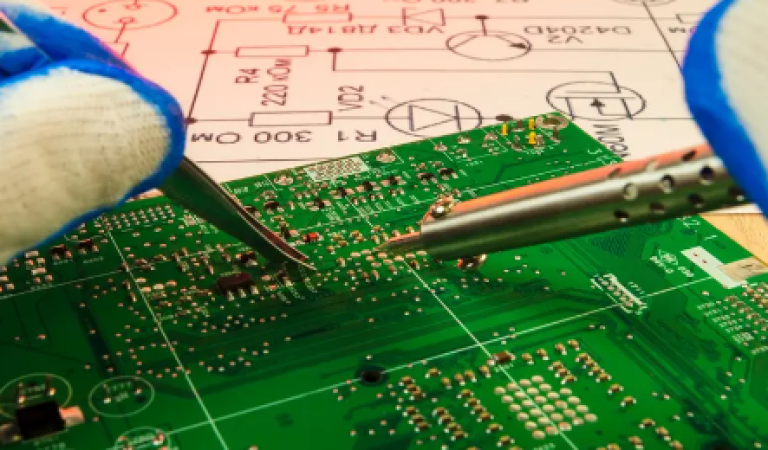

Industrial control equipment often operates under high temperatures, heavy loads, and continuous working conditions. These environments require PCBs with good heat dissipation, stable structures, and long-term reliability.
Traditional FR-4 PCBs may face heat buildup and reduced performance in high-power applications. For this reason, aluminum PCBs are widely used in industrial control systems. Their metal core structure helps transfer heat more efficiently and provides better mechanical strength than standard FR-4 boards.
Aluminum PCBs are commonly used in power supplies, motor control systems, industrial automation equipment, LED drivers, and other applications where thermal management is important.
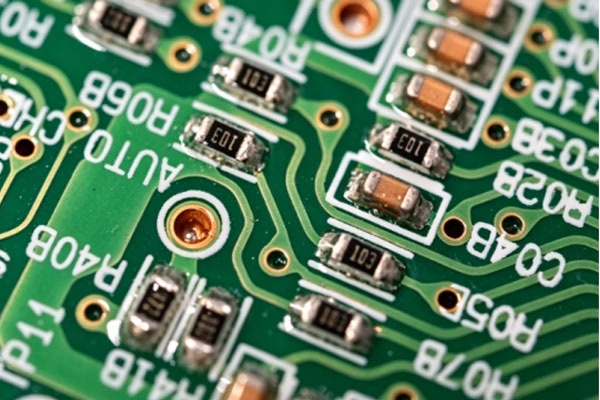
Aluminum PCBs Offer Multiple Core Characteristics
Industrial control equipment typically requires long-term operation in high-temperature, high-humidity, and vibrating environments.
- Aluminum PCBs feature excellent heat dissipation performance, quickly conducting heat to the metal base layer and reducing component temperature rise.
- The high mechanical strength structure enhances vibration and impact resistance, making it suitable for heavy machinery and industrial automotive equipment.
Stable heat dissipation and mechanical performance are key characteristics of aluminum PCBs.
Aluminum PCBs Offer Significant Advantages in Industrial Control Applications
High-power industrial systems have increasingly stringent requirements for PCB heat dissipation and reliability.
- Aluminum PCBs achieve higher thermal conductivity, reducing the need for additional heat sinks and fans.
- Aluminum PCBs possess strong corrosion resistance, allowing long-term operation in complex environments such as those with oil contamination and salt spray.
In harsh industrial environments, aluminum PCBs maintain more stable operational performance.
Mature Manufacturing Capability Meets Complex Industrial Project Requirements
Industrial control equipment has complex structures, placing stricter demands on PCB processing accuracy.
- Customization of impedance control, multilayer structures, and high-thermal-conductivity designs is supported.
- High-precision etching and lamination processes ensure circuit stability and structural reliability.
Flexible manufacturing capability makes it easier to meet the needs of different industrial projects.
Common Issues Mainly Focus on Heat Dissipation and Long-Term Reliability
During the procurement phase, many industrial projects pay special attention to the actual operational performance of aluminum PCBs.
- Compared with standard FR-4 PCBs, aluminum PCBs offer higher thermal conductivity, effectively reducing hot spot issues.
- Although material costs are higher, they reduce the need for additional thermal components and lower maintenance expenses.
The total cost of ownership advantage is also an important reason why aluminum PCBs are highly valued in the industrial sector.
Comparison Table of Key Characteristics of Aluminum PCBs for Industrial Control
| Technical Dimension | Aluminum PCB Performance | Key Focus | Core Advantage |
| Heat Dissipation Performance | High thermal conductivity metal core structure | Temperature rise control capability | Enhanced heat dissipation efficiency |
| Mechanical Strength | Vibration and impact resistance | Stability in heavy industrial environments | Structural stability |
| Electrical Performance | High insulation, low leakage current | High-humidity and dusty environments | Operational reliability |
| Environmental Adaptability | Corrosion and temperature resistance | Salt spray and oil contamination environments | Long service life |
| Manufacturing Process | Supports impedance control and custom structures | Adaptability to industrial equipment | Flexible design |
| Cost Effectiveness | Reduces heat dissipation and maintenance costs | Long-term operating expenses | Lower total cost of ownership |
Aluminum PCBs for industrial control applications are driving industrial electronic equipment toward greater stability, stronger heat dissipation capability, and longer service life. Facing high-temperature, high-humidity, and high-vibration environments, PCBs must achieve a more reasonable balance among materials, structure, manufacturing processes, and thermal management. Through systematic analysis of key characteristics, core advantages, manufacturing capabilities, and common issues, we can more fully understand the application value of aluminum PCBs in modern industrial control systems, and provide clearer reference directions for subsequent product development and project selection.
If you need assistance, please contact us at sales@toplinecircuit.com.