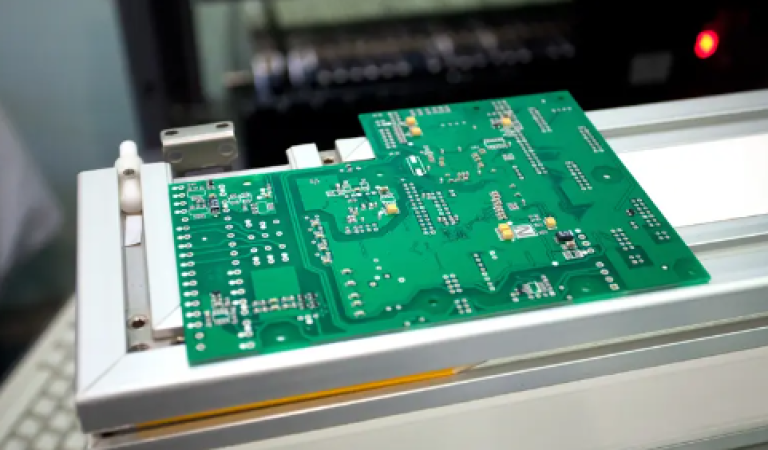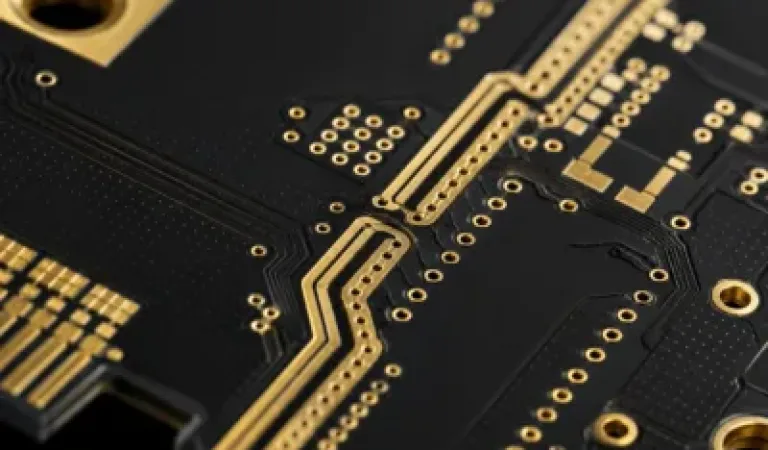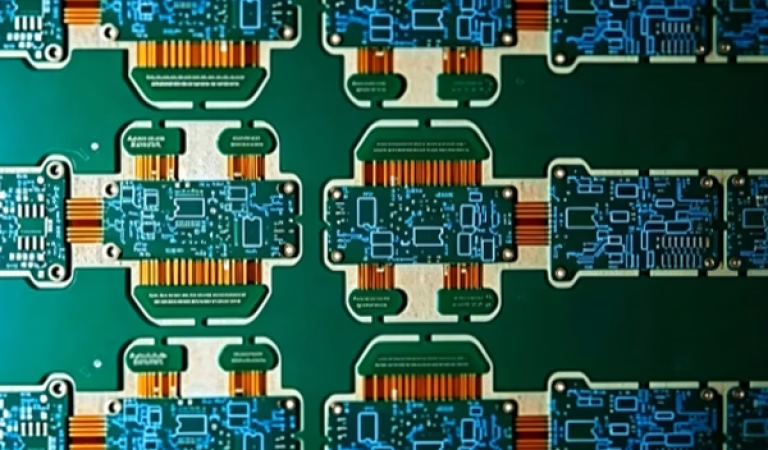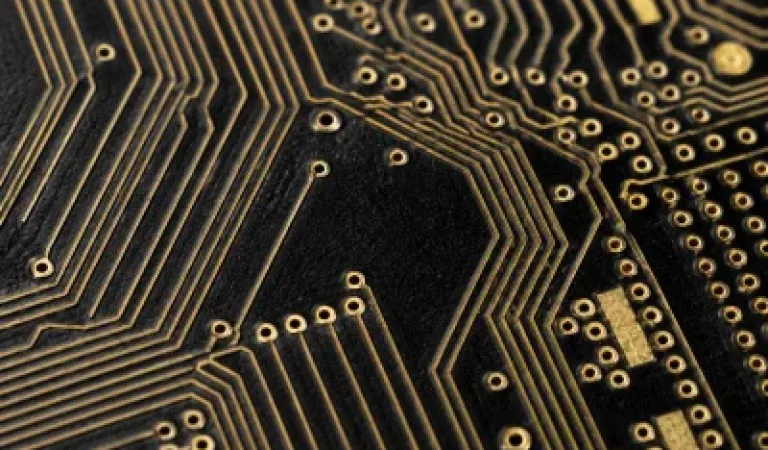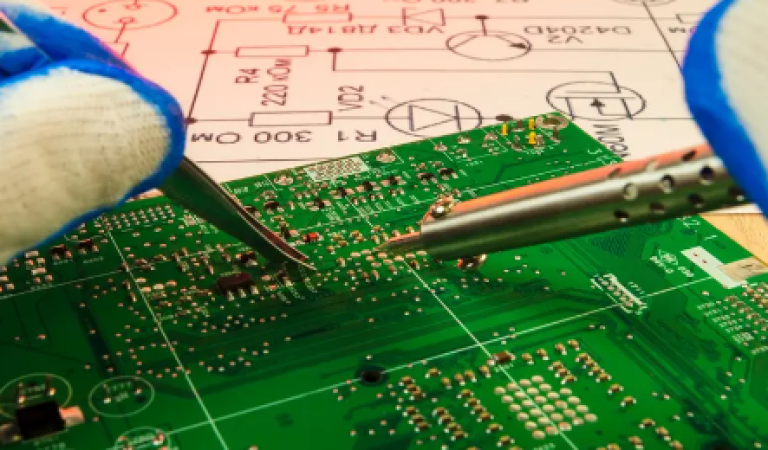

Diagnostic and imaging equipment have extremely high requirements for the high temperature resistance, high stability, and high precision of supporting PCBs. High glass transition temperature (high Tg) printed circuit boards, with a core Tg value ≥ 170℃, meet various harsh requirements of the equipment and are the core supporting components of medical diagnostic equipment.
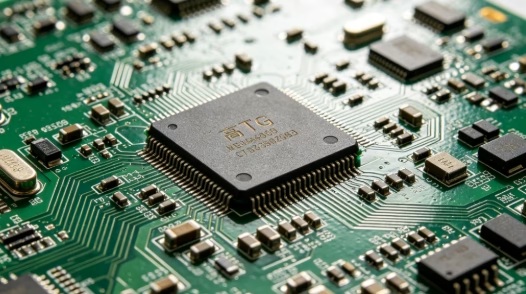
Core Performance Advantages of High Tg Printed Circuit Boards
Targeting the core needs of diagnostic and imaging equipment for long-term high-temperature operation, accurate signal transmission, and precise structure, this product relies on high Tg characteristics to create four core performance advantages, as follows:
- High Temperature Resistance: Tg value ranges from 170℃ to 180℃, which can withstand the high temperature of 260℃ lead-free soldering, avoid substrate softening and delamination, adapt to long-term high-temperature operation of equipment, and reduce the probability of failure.
- High Stability: Low coefficient of thermal expansion reduces warpage and dimensional deviation caused by temperature, adapts to multi-layer board design, ensures the performance of plated through holes, and meets the precise installation needs of equipment.
- Excellent Electrical Performance: Low dielectric constant (Dk≈3.5±0.05@1GHz) and low dielectric loss (Df≤0.002) reduce signal attenuation and crosstalk, ensuring the accuracy of diagnosis and treatment data.
- High Reliability: Resistant to chemical corrosion, compliant with RoHS environmental standards, halogen-free and non-toxic, suitable for the strict safety and environmental requirements of the medical field.
The core advantages of the product accurately match the core needs of diagnostic and imaging equipment, providing a solid guarantee for the long-term stable and accurate operation of the equipment.
Core Features of High Tg Printed Circuit Boards – Highlighting Product Differentiation Advantages
| Feature Category | Specific Description | Core Value |
| Substrate Selection | Adopts high-end resin substrates such as Panasonic MEGTRON6, and some are modified with graphene to improve Tg value and comprehensive performance. | Lay a solid foundation for high temperature resistance and high stability, and extend the service life of equipment. |
| Process Precision | Vacuum lamination and laser drilling are adopted, with hole diameter precision of ±25μm, impedance control within ±5% tolerance, and support for 4-32 layer design. | Adapt to high-density interconnection needs, ensure accurate signal transmission, and improve equipment efficiency. |
| Quality Control | 100% flying probe testing and 288℃ solder bath testing, with a defect rate of <0.1%, complying with IPC-TM-650 standard. | Ensure product reliability, reduce equipment failure, and meet medical industry standards. |
| Custom Adaptation | Can customize circuit layout, number of layers, and surface treatment (immersion gold, OSP, etc.) to adapt to different equipment needs. | Improve compatibility and meet personalized customization needs. |
Frequently Asked Questions
Q1: Can it be adapted to various diagnostic equipment?
A1: It can be fully adapted. Customized solutions can be provided according to the parameters of CT, MRI, ultrasound and other equipment to meet high-frequency, high-temperature and high-precision needs.
Q2: What is the service life and quality guarantee?
A2: The service life can reach 8-10 years under normal use, far exceeding that of ordinary PCBs; it has passed strict testing, and free maintenance or replacement is provided for product quality problems.
Q3: Does it comply with medical industry standards?
A3: It complies with IEC 60601-1-2, RoHS and other standards, passes UL 746H rating, is non-toxic and environmentally friendly, and can be directly used in medical equipment.
Q4: What is the core difference between this product and ordinary Tg PCBs?
A4: Ordinary Tg PCBs (130℃-150℃) are prone to softening and board bursting at high temperatures, leading to equipment failure; this product has a Tg value ≥170℃, with better high temperature resistance and stability, ensuring accurate operation of equipment and reducing maintenance costs.
Applicable Scenarios
Based on the core advantages of high temperature resistance, high stability and excellent electrical performance, the product can be widely adapted to various diagnostic and imaging equipment, covering the entire medical diagnosis scenario, as follows:
- CT Diagnostic Equipment: Adapt to detectors, data acquisition and image reconstruction boards, ensure accurate transmission of X-ray signals, and help accurately locate lesions.
- MRI Magnetic Resonance Equipment: Used in radio frequency transmission and reception boards and gradient amplifier boards, reduce signal interference, ensure clear images, and run stably.
- Ultrasound Diagnostic Equipment: Adapt to probes and signal processing boards, realize accurate amplification of tiny signals, and improve the accuracy of diagnosis results.
- Other Diagnostic Equipment: Adapt to biochemical, immune and molecular diagnostic equipment, as the core control component, ensuring the accuracy of the detection process.
The all-round scenario adaptation capability can meet the personalized needs of different medical diagnostic equipment and provide strong support for precise medical diagnosis.
We focus on the R&D, production and customization of such PCBs, providing high-quality supporting products for medical equipment manufacturers. For more details, customized solutions or quotations, please contact us: WhatsApp: +86 13425156463, Email: sales@toplinecircuit.com, and we will provide professional services in a timely manner.