
The selection and combination of tools directly affect operational efficiency and soldering quality during PCB soldering. Different types of circuit boards and components have different requirements for tool precision, stability, and functionality. An inappropriate tool configuration can easily lead to problems such as cold solder joints, solder bridges, or component damage, increasing repair difficulty. In practical applications, it is necessary to make reasonable selections based on the soldering scenario and operational needs, ensuring both basic functionality and ease of operation. Scientific configuration of commonly used tools can make the soldering process smoother, while improving overall work efficiency and finished product quality.
Basic Soldering Tool Configuration
Basic tools are the core guarantee for completing the work during soldering operations.
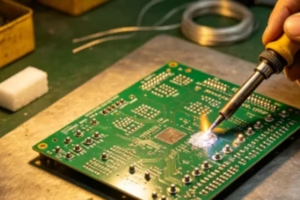
- Soldering Iron Equipment: Choosing a soldering iron with stable temperature control helps to accurately control the soldering temperature.
- Soldering Wire and Flux: Provide good conductive connection, improving the quality and strength of solder joints.
These basic tools are indispensable parts of the soldering process; proper selection ensures smooth operation and improves soldering stability.
Disassembly and Auxiliary Operation Tools
Auxiliary tools can improve operational flexibility when handling component replacement or adjustment.
- Hot air gun equipment: Suitable for the removal and installation of surface mount components, improving efficiency.
- Tweezers and desoldering pump: Convenient for picking up components and cleaning excess solder.
The use of auxiliary tools allows for more precise operation, reduces interference with the circuit board, and improves overall processing efficiency.
Detection and protection tools
Detection and protection are equally important during the soldering process, helping to ensure reliable results.
- Multimeter testing tool: Used to test circuit continuity, voltage, and other parameters to confirm the soldering effect.
- Anti-static equipment: Such as anti-static wrist straps and mats, to prevent electrostatic damage to sensitive components.
By perfecting the detection and protection configuration, problems can be detected in time and potential risks can be avoided, making the soldering results more stable and reliable.
The selection of PCB soldering tools needs to be reasonably matched according to actual needs. From basic soldering equipment to auxiliary operating tools, and then to detection and protection devices, each type of tool plays an important role. Optimizing tool combinations through continuous practice can make the operation more efficient and help improve soldering quality. By using various tools in a standardized manner, the circuit board connection can be made more robust, providing a stable guarantee for subsequent use.