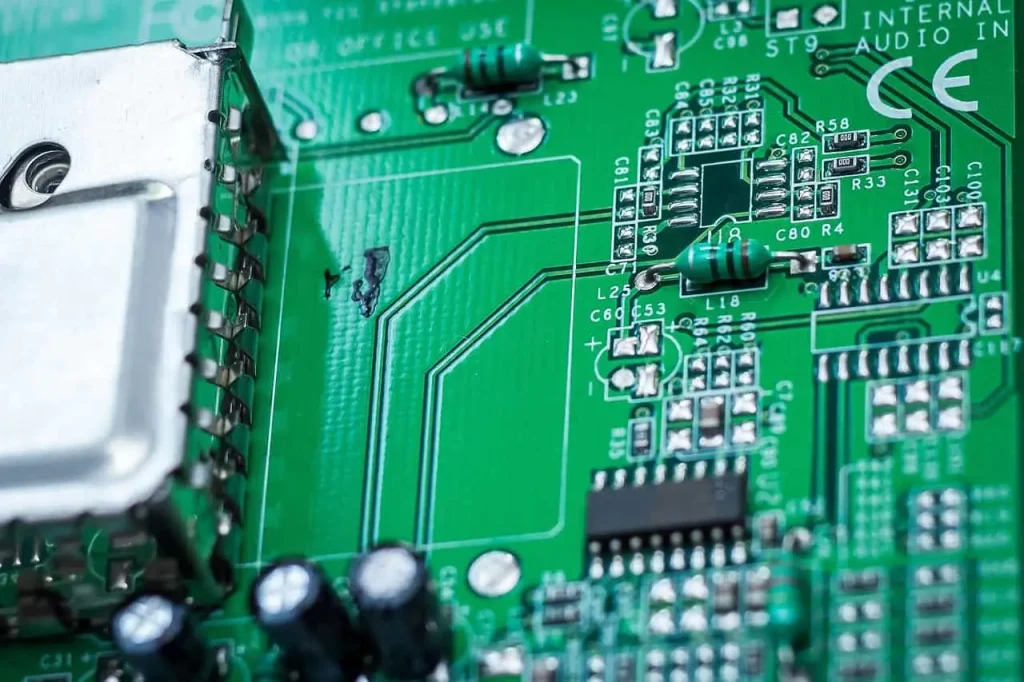

As a core component of electronic products, the technical requirements of the PCB directly determine the overall performance, stability, and lifespan of the device. Whether in simple consumer electronics or complex communication equipment or industrial systems, the PCB plays a crucial role in electrical connections and signal transmission. Therefore, a series of technical specifications must be strictly followed during the design and manufacturing process to ensure stable operation in various environments.
With the continuous development of electronic technology, the technical requirements for PCBs are constantly increasing. From the initial basic conductivity requirements to today’s demands for high-frequency signals, high-density wiring, and high reliability, the PCB has transformed from a “simple carrier” into a “high-performance platform.” Topray Circuits provides integrated services for PCB layout, manufacturing, assembly, and testing, comprehensively meeting the technical needs of different application scenarios, thereby improving overall product quality.
Key Points in PCB Design and Manufacturing
· Electrical Performance Requirements
Including conductivity, impedance control, and signal integrity to ensure normal circuit operation.
· Mechanical Performance Requirements
The PCB needs sufficient strength and durability to prevent deformation or breakage during use.
· Thermal Performance Requirements
Good heat dissipation prevents components from being damaged by overheating, improving product stability.
• Process Precision Requirements
These include line width and spacing, hole size, and interlayer alignment accuracy, directly impacting manufacturing quality.
• Environmental Adaptability
PCBs must be moisture-proof and corrosion-resistant to adapt to various working environments.
• Design for Manufacturability
The design must conform to manufacturing processes to avoid increasing manufacturing difficulty or cost.
Comparison of Technical Requirements
Different application areas have significantly different PCB technical requirements. For example, in ordinary household appliances, PCBs primarily focus on basic conductivity and cost control, with low requirements for high-frequency performance; while in communication equipment or servers, strict impedance control and signal integrity design are required. In terms of mechanical performance, rigid PCBs are suitable for stable structures, while flexible PCBs prioritize bending performance. Regarding thermal performance, high-power devices require stronger heat dissipation designs, such as increased copper thickness or the use of heat dissipation structures. In contrast, low-power devices have relatively lower thermal requirements. Furthermore, in high-end applications, such as HDI or RF PCBs, higher precision and material requirements are needed, while ordinary PCBs focus more on balancing cost and efficiency. Therefore, the differences in technical requirements essentially stem from the different application needs.
Frequently Asked Questions
Q: Why is impedance control important?
A: Because impedance mismatch can cause signal reflection, affecting circuit performance.
Q: Is heat dissipation always necessary for PCBs?
A: Yes, especially for high-power circuits; otherwise, components can be easily damaged.
Q: Is smaller trace width always better?
A: No, excessively small trace width increases manufacturing difficulty and affects reliability.
Q: What does environmental adaptability include?
A: It includes moisture resistance, corrosion resistance, and high-temperature resistance.
Technical Requirements for PCB in Common Industries
In smartphones, PCBs need to meet the requirements of high-density wiring and high-speed signal transmission, therefore HDI technology is typically used, and impedance and inter-layer alignment accuracy are strictly controlled. In automotive electronics, PCBs not only need good electrical performance but also strong vibration resistance and high-temperature resistance to adapt to complex environments. In industrial control equipment, PCBs prioritize long-term stability and anti-interference capabilities, requiring enhanced grounding and shielding measures during design. In these applications, companies like Topray Circuits can provide customized solutions based on different needs, ensuring that all technical indicators meet the requirements of actual applications.
From electrical performance to mechanical strength, from thermal management to manufacturing precision, every aspect significantly impacts the final product quality. Focusing solely on one metric while neglecting others during the design process can easily lead to a decline in overall performance. Therefore, PCB development requires a comprehensive design approach that balances various technical requirements. For example, ensuring signal integrity while considering manufacturing feasibility, and improving performance while controlling costs. Simultaneously, the manufacturing process is equally crucial; only through rigorous process control and quality inspection can design goals be truly achieved. Leveraging the capabilities of vendors like Topray Circuits, which offer one-stop services, enables efficient collaboration between design, manufacturing, and testing, thereby comprehensively improving the performance and reliability of PCB products and ensuring stable operation in various application environments.