
PCB board repair may seem like a highly technical task, but in practice, many problems don’t stem from complex faults, but rather from common cognitive biases or operational habits. Ignoring these misconceptions not only reduces repair efficiency but can also cause additional damage to the circuit board, even affecting its subsequent stability. Establishing clear diagnostic logic and standardized operating procedures is crucial in daily repairs. Understanding and avoiding common problems can make the repair process smoother, improve overall processing quality, and reduce rework.
Over-reliance on experience for fault diagnosis
When faced with a problem, relying solely on experience without systematic testing can easily lead to misdiagnosis.
- Ignoring instrument testing: Performing disassembly and repair operations without using tools like multimeters to confirm data.
- Subjective inference of problem points: Judging based on past cases, ignoring the actual differences in the current circuit.
This approach easily leads to inaccurate localization, wasting time and potentially expanding the scope of the fault, increasing the difficulty of repair.
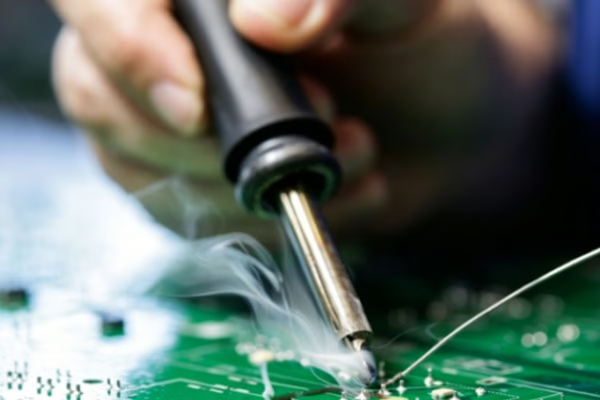
Improper soldering operations
Soldering is one of the most error-prone parts of the repair process.
- Improper temperature control: Overheating the soldering iron or prolonged soldering time may damage circuits or components.
- Rough solder joint treatment: Issues such as cold solder joints and bridging can occur, affecting circuit stability.
Improper soldering methods directly impact repair quality and may even cause the circuit to malfunction again in a short period.
Neglecting protection and attention to detail
A lack of awareness of protection during operation can easily cause hidden damage to the circuit board.
- Failure to take anti-static measures:Static electricity may break down sensitive components, leading to potential malfunctions.
- Inadequate cleaning and tidying: Residual flux or impurities may affect circuit performance.
Oversights in details are often difficult to detect in time, but they can affect the long-term stable operation of the circuit and require sufficient attention.
PCB board repair requires technical support, but also relies on good operating habits and a strong sense of standardization. From problem diagnosis to specific handling, every step may contain potential pitfalls. Continuous summarization and adjustment are essential to improve overall repair skills. In practice, emphasizing test data, standardizing operating procedures, and handling details can effectively reduce risks and make repair results more stable and reliable. Furthermore, continuous accumulation of experience can gradually form a more scientific repair approach, enabling more composed and efficient handling of complex problems.