
Bluetooth earphones, wearable devices, and other compact wireless products often require PCB structures that fit limited installation space while maintaining reliable electrical connections. In these applications, traditional rigid PCBs may not provide the flexibility needed for complex three-dimensional layouts and moving components.
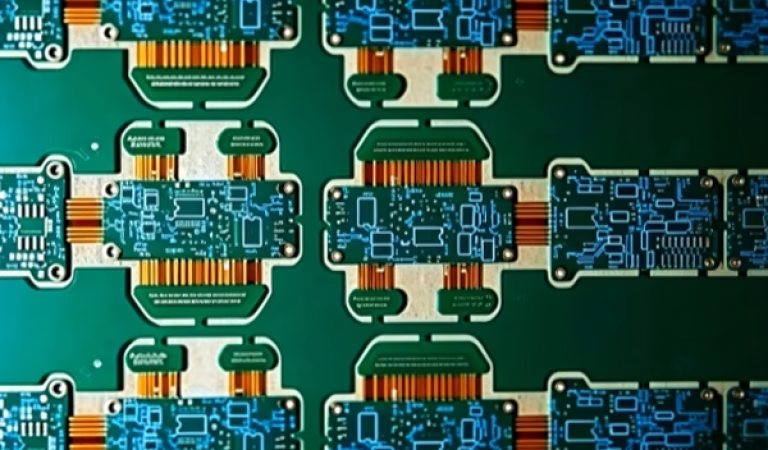
Rigid-flex multilayer PCBs combine flexible circuit sections with rigid board areas in a single structure. This design supports high-density routing while reducing the need for connectors, cables, and additional interconnects. It can also simplify assembly and help make better use of available internal space.
Because of these advantages, rigid-flex PCBs are widely used in Bluetooth earphones, smart wearables, portable audio devices, and other compact electronic products that require both mechanical flexibility and stable electrical performance.
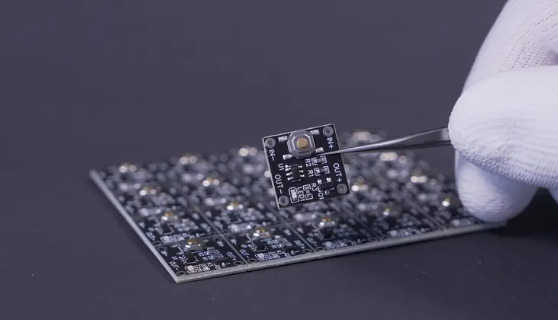
What Is a Rigid-Flex Multilayer PCB for Bluetooth Earphones?
A rigid-flex PCB for Bluetooth earphones is a multilayer circuit board structure that combines flexible printed circuits (FPC) with rigid PCB sections.
This structure provides both flexibility and stability, including:
- Flexible bending capability.
- High-density circuit routing.
- Compact product structure design.
- Stable high-speed signal transmission.
- Improved vibration resistance.
- Lightweight product construction.
- Higher assembly reliability.
- Longer service life.
In modern TWS Bluetooth earphones, rigid-flex PCBs are widely used in the main control area, battery connection area, and antenna module section.
Why Are Rigid-Flex PCBs Better for Bluetooth Earphones?
The internal space of Bluetooth earphones is extremely limited, while traditional cable and connector structures occupy more space and increase failure risks.
Rigid-flex PCBs provide several important advantages:
| Product Requirement | Rigid-Flex PCB Advantage | Actual Benefit |
| Compact Design | Reduces connectors and cables | Saves internal space |
| Long-Term Usage | Flexible sections withstand repeated bending | Improves durability |
| High-Speed Signal Transmission | Multilayer structure optimizes routing | Improves signal stability |
| Lightweight Products | Reduces overall structure weight | Enhances wearing comfort |
| High Integration Design | Supports complex component layouts | Increases functional integration |
| Automated Assembly | Reduces manual connection requirements | Improves production efficiency |
As Bluetooth earphones become thinner and lighter, the importance of rigid-flex PCBs continues to grow.
Why Does the Multilayer Structure Improve Bluetooth Earphone Performance?
Modern Bluetooth earphones not only support wireless communication but also require noise cancellation, touch control, voice recognition, and high-speed data processing.
Multilayer PCB structures help achieve:
- More complex circuit routing.
- More stable power management.
- Reduced signal interference.
- More stable Bluetooth signal transmission.
- Stronger EMI control capability.
- Higher component integration density.
For ANC (Active Noise Cancellation) Bluetooth earphones, stable signal transmission and low interference are especially important.
What Are the Main Manufacturing Challenges of Rigid-Flex PCBs?
Compared with standard PCBs, rigid-flex PCB manufacturing processes are significantly more complex.
Key production controls include:
- Stability of rigid-flex lamination.
- Reliability of flexible bending areas.
- Precision of multilayer alignment.
- Consistency of impedance control.
- Laser drilling accuracy.
- High-frequency signal integrity.
- Heat resistance of flexible materials.
- SMT assembly stability.
In miniature devices such as Bluetooth earphones, even very small processing deviations may affect final product reliability.
Why Is High-Density PCB Design Becoming More Important for Bluetooth Earphones?
As chip sizes continue to shrink, the internal integration level of Bluetooth earphones keeps increasing.
High-density PCB designs help achieve:
- Smaller product size.
- More complex function integration.
- Higher component placement density.
- More stable high-speed signal transmission.
- Lower power consumption design.
- Higher battery utilization efficiency.
Modern high-end Bluetooth earphones often need to integrate the following components into extremely limited space:
- Bluetooth chips.
- Power management modules.
- Noise cancellation chips.
- MEMS microphones.
- Antenna systems.
- Charging management systems.
High-density rigid-flex PCBs have become an essential foundation for integrating these advanced functions.
Main Application Areas of Rigid-Flex PCBs in Bluetooth Earphones
As TWS earphone functions continue to evolve, rigid-flex PCBs are now widely used in multiple critical areas.
- Main Control Module Area: Supports Bluetooth chips and high-speed data processing.
- Battery Connection Area: Improves flexible connection reliability.
- Antenna Area: Optimizes wireless signal transmission performance.
- ANC Noise Cancellation Module: Reduces signal interference and improves audio stability.
- Charging Case Connection System: Improves long-term insertion and removal reliability.
- Touch Control Area: Supports highly sensitive touch functions.
- Microphone System: Enhances voice recognition and noise reduction capability.
Why Are More High-End Earphones Using Rigid-Flex PCBs?
Premium Bluetooth earphones require higher reliability, lighter structures, and better internal space utilization.
Rigid-flex PCBs effectively help to:
- Improve product reliability.
- Reduce internal connection failures.
- Increase long-term bending durability.
- Optimize internal space layout.
- Improve automated assembly efficiency.
- Enhance overall product quality.
More and more high-end TWS earphones now use multilayer rigid-flex PCB structures as their core electronic solution.
Why Choose Our Bluetooth Earphone Rigid-Flex PCB Products?
Bluetooth earphones require extremely high PCB precision, stability, and long-term reliability.
Our rigid-flex PCB products provide the following advantages:
- Support for complex multilayer rigid-flex structures.
- Ultra-thin and lightweight design capability.
- High-precision circuit manufacturing.
- Stable impedance control capability.
- Strong flexible bending reliability.
- Extensive consumer electronics PCB manufacturing experience.
- Support for rapid prototyping and mass production.
- Strict quality inspection procedures.
- Stable high-speed signal transmission performance.
We provide reliable PCB manufacturing support for TWS earphones, wearable devices, wireless audio products, and compact electronic equipment.
As TWS Bluetooth earphones, smart audio devices, and wearable electronics continue to evolve, rigid-flex multilayer PCBs have become an essential foundation for lightweight structures, high integration density, and stable wireless connectivity. Compared with traditional PCB structures, rigid-flex PCBs are better suited for complex space layouts, high-speed signal transmission, and long-term bending reliability requirements, playing an increasingly important role in modern wireless audio products.
Topline Circuit specializes in rigid-flex PCBs, high-frequency PCBs, and complex multilayer PCB manufacturing, providing reliable PCB solutions for Bluetooth earphones, wearable devices, and advanced consumer electronics. For more information about customized rigid-flex PCB solutions or to discuss your project requirements, please contact us at sales@toplinecircuit.com.